Opening a US Bank Account 2026: Real Banks vs. Fintechs
 Christian··5 min read
If you're a German entrepreneur looking to open a US bank account, you'll find hundreds of guides online. Most recommend Mercury, Wise, or Relay. Account opened in 15 minutes, done. What these guides don't mention: These accounts aren't bank accounts in the true sense. And they won't help you build a US credit history.
The difference between a real US bank account and a fintech account is fundamental. If you don't understand it, you'll waste months and miss the actual purpose of having a US account. This article explains the difference, shows which banks work for non-residents, and lays out the right order to follow.
Why a US Bank Account at All
There are three reasons why you need a US bank account as a German entrepreneur. And they build on each other.
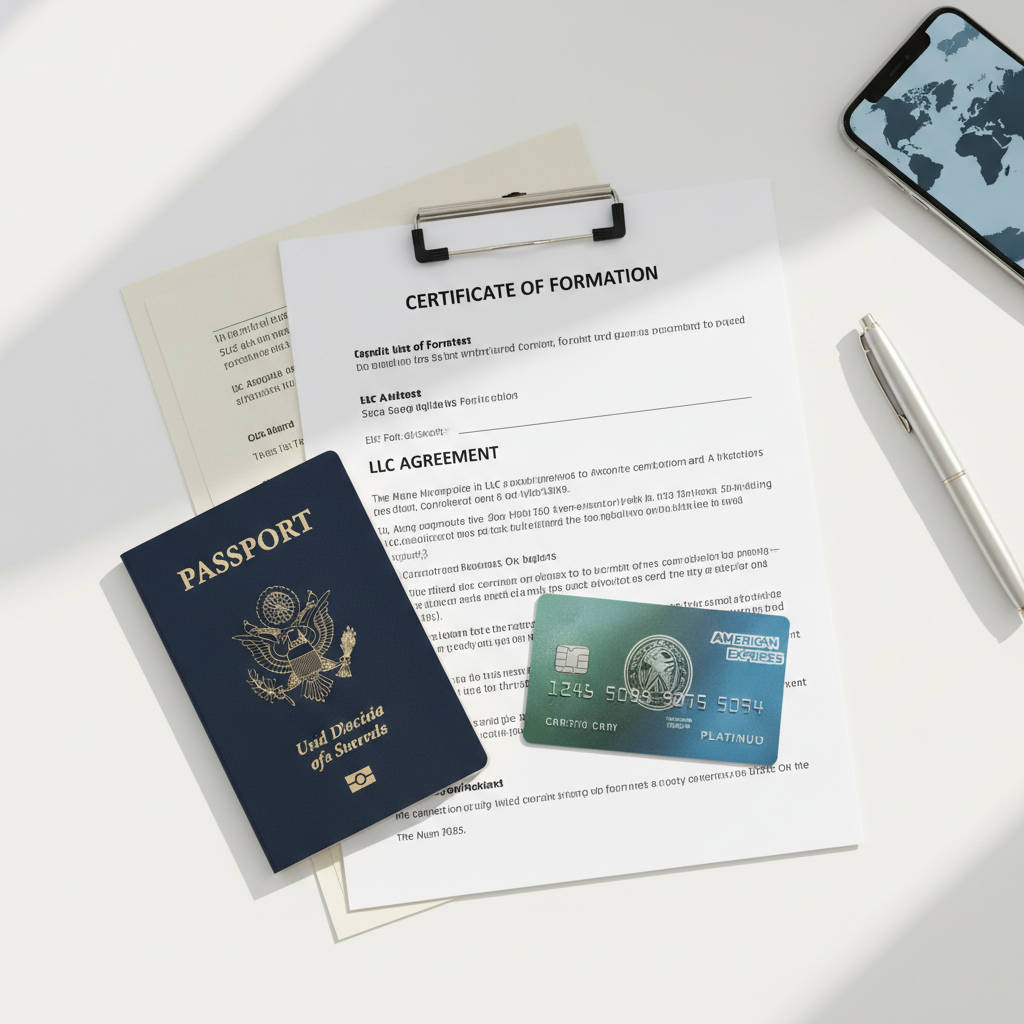
First: Payment processing in USD. If you have a US LLC, serve customers in the US, or invoice in dollars, you need an account that can receive payments in USD. Transfers from a US customer to your German account are possible but expensive, slow, and unprofessional. A US account solves that.
Second: Prerequisite for credit building. Before a US bank gives you a credit card, it wants to see that you have an active bank account. No account, no credit. It's that simple. The bank wants a relationship with you before extending credit. And that relationship starts with a checking account.
Third: Business account for your LLC. Every US LLC needs a separate bank account. Anyone who runs LLC revenue through a personal German account risks losing the LLC's liability protection. That's called "piercing the corporate veil," and it's a real risk, not a theoretical one.
These three reasons overlap. And that's exactly why you don't need one account but in many cases two: one for daily business operations and one at a real bank for credit building.
Real Banks vs. Fintechs: The Crucial Difference
This is the most important section of this article. If you take away just one thing, make it this.
Real banks like Chase, Bank of America, Capital One, and Wells Fargo are FDIC-insured banking institutions with their own banking license. They report to the three major credit bureaus (Experian, TransUnion, Equifax). If you open a checking account at Chase and later get a credit card, your payment history is reported to the credit bureaus. That's how you build credit.
Fintechs like Mercury, Relay, and Wise Business are not banks. They're technology companies that offer banking services. Their deposits are held at partner banks (Mercury uses Evolve Bank & Trust and Choice Financial Group; Relay uses Thread Bank). They don't have their own banking license. And here's the critical point: They don't report to the credit bureaus.
What this means in practice: You can run your business through Mercury for years, move hundreds of thousands of dollars, be a perfect customer. Your US credit score stays at zero. Mercury doesn't report. Relay doesn't report. Wise doesn't report. As far as the credit bureaus are concerned, you don't exist.
That's not a criticism of these companies. They're built for a different purpose: simple, digital payment processing for startups and small businesses. And they're excellent at that. But credit building isn't part of their feature set.
If you don't understand this, you'll make a mistake that costs you months. I know entrepreneurs who used Mercury exclusively for a year and were then surprised when Chase rejected them for a credit card. Because no credit score existed. No report, no score. That's how the system works.
Real Banks That Work for Non-Residents
Not every US bank opens accounts for foreigners without a US address. Most don't. But some do, and you should know which ones.
Chase
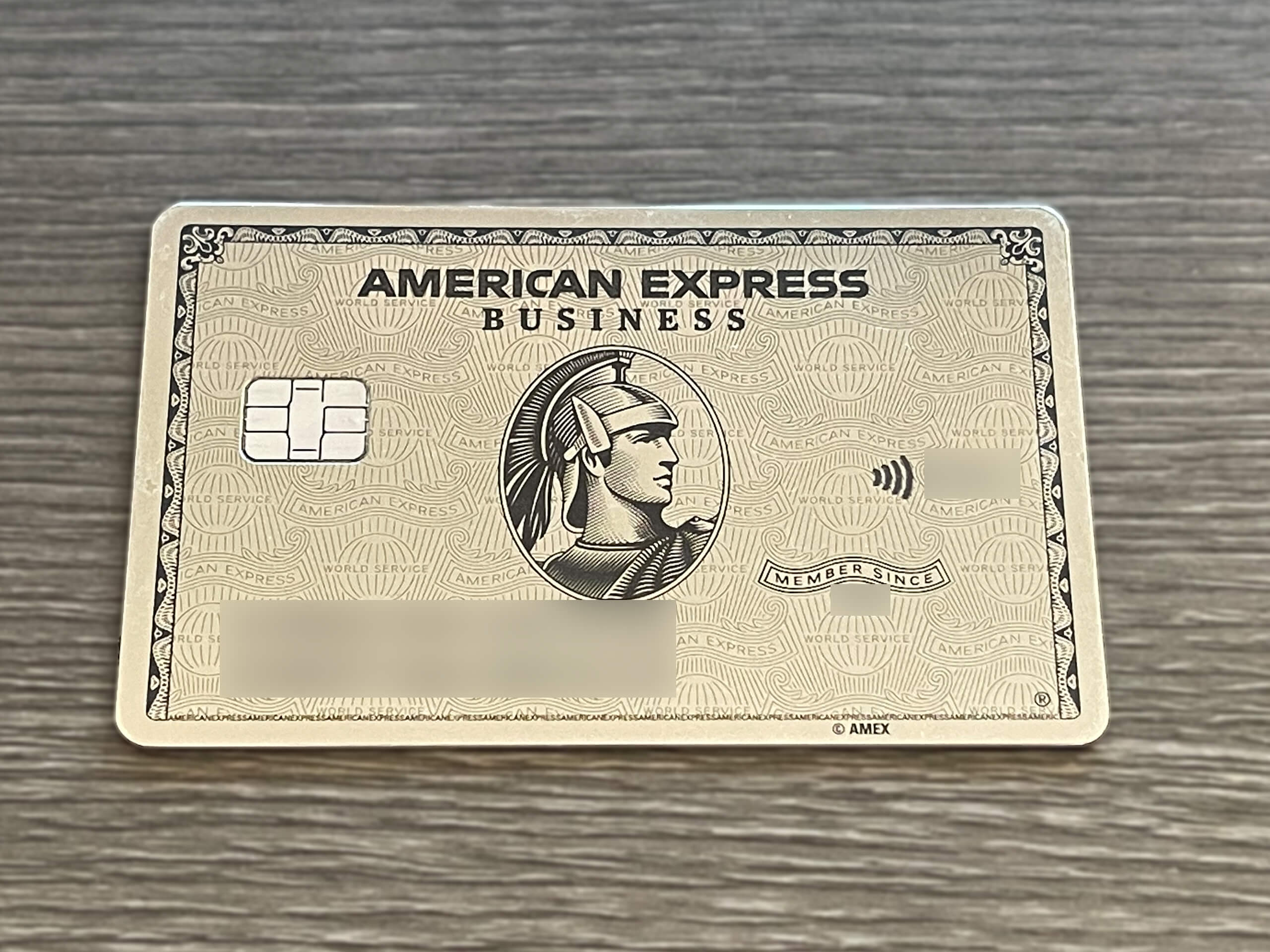
Chase is the gold standard. It's the largest bank in the US (by assets), with excellent online banking, a strong app, and above all: a first-class credit card portfolio. Having a checking account at Chase makes it significantly easier to get Chase credit cards later. And Chase credit cards (Sapphire Preferred, Sapphire Reserve, Ink Business) are among the best on the market.
The downside: Chase usually requires an in-person visit at a branch. You have to physically be in the US, walk into a Chase branch, and open the account on-site. With LLC documents, your EIN letter, and your passport. Some branches have more experience with international clients than others. Branches in Miami, New York, and Los Angeles deal with this more frequently and know what they're doing.
There are reports of people who opened a Chase Business Checking remotely, but that's not the norm. Plan for an in-person visit. If you already travel to the US once or twice a year, it's not a big deal. If not, another bank might be a better starting point.
Bank of America
Bank of America is the second-largest US bank and somewhat more accessible than Chase for international clients. Account opening also often requires an in-person visit, but Bank of America has in the past accepted remote openings for LLC owners when documentation was complete.
What makes Bank of America attractive: The Preferred Rewards program, which offers better terms and credit card bonuses for higher deposit balances. And the bank has a solid, if not spectacular, credit card portfolio.
Capital One
Capital One is interesting because the bank has traditionally been more open to customers with thin or no credit history. Capital One was one of the first major US banks to offer secured credit cards, meaning credit cards with a security deposit. For entering the US credit market, Capital One is therefore often the first step.
Account opening at Capital One can in some cases be done remotely. The bank also has online banking that works for international users. Capital One's credit cards (particularly the Venture X) have gotten significantly better in recent years.
Wells Fargo
Wells Fargo is the third-largest US bank and has opened accounts for non-residents in the past. The bank has a mixed reputation, partly due to the unauthorized accounts scandal a few years back. Functionally, Wells Fargo is a solid option with an extensive branch network, but experiences from international clients vary widely.
Mercury, Relay, Wise Business: What They're Good For
Now that the difference is clear, I should also speak up for these companies. Because for their intended purpose, they're excellent.
Mercury is my personal favorite for the business operations of a US LLC. Account opening takes minutes, not weeks. The app is first-rate. Online banking is intuitive. You get a debit card, can send and receive ACH transfers, pay bills, and manage multiple accounts under one LLC. Mercury accepts international founders with an LLC and EIN without requiring you to travel to the US.
For daily business operations, meaning receiving payments, paying bills, moving money between accounts, Mercury is hard to beat. The interface is clean, API integrations with accounting tools work well, and support responds quickly.
Relay is a similar solution focused on small businesses. Relay offers free business checking accounts with the ability to create up to 20 separate accounts for different purposes (one for taxes, one for payroll, one for marketing). That's useful for entrepreneurs who want to organize their finances using the Profit First model.
Wise Business (formerly TransferWise) excels at international transfers. If you regularly move money between EUR and USD, Wise offers the best exchange rate. Wise isn't a full-featured business account in the US sense, but rather a multi-currency account with excellent exchange rates. For pure payment processing between Germany and the US, Wise is hard to beat.
A note on FDIC protection: Mercury and Relay offer FDIC protection through their partner banks, though with limitations. Wise Business doesn't have full FDIC protection on all deposits in the US. For most small business owners, that's not a practical concern because the amounts fall below the coverage limits. But it's a difference from a real bank that you should be aware of.
The Opening Process: Remote vs. In-Person
Here's where it gets practical. The account opening process varies by bank.
Remote opening (Mercury, Relay, Wise, partly Capital One):
You need your LLC documents, an EIN, and a passport. You fill out the application online, upload the documents, and wait for verification. At Mercury, this often takes just one to two business days. At Relay, it's similar. You don't need to be in the US.
That's the big advantage of fintechs: accessibility. Opening a US business account from your couch in Berlin without booking a flight.
In-person opening (Chase, Bank of America, Wells Fargo):
You walk into a branch with your documents. The banker reviews everything, asks questions about your business, makes copies, and opens the account. It takes 30 to 60 minutes. Afterward, you receive your account details, and the debit card is mailed to your US address.
Important: Not every branch is equal. In major cities with lots of international clients (Miami, New York, Los Angeles, San Francisco, Houston), bankers are more experienced with foreign LLC owners. In a small town in Iowa, the banker may have never opened an account for a foreigner and may be unsure which documents to accept. My advice: Pick a branch in a major city and call ahead to ask whether they open accounts for international LLCs.
Some bankers ask for a US address. Some ask for a Social Security Number (which you don't have as a non-resident). Some ask for an ITIN. The requirements vary from branch to branch, even within the same bank. It's frustrating, but it's the reality of the US banking system. If one branch turns you down, try another.
What You Need: The Document Checklist
Here's the complete list of documents you need to open an account at a US bank. Not every bank requires everything, but if you have it all, you're on the safe side.
LLC documents:
- Articles of Organization. This is the formation certificate of your LLC, issued by the Secretary of State of the state where you incorporated (typically Wyoming, Delaware, or Florida).
- EIN Letter (CP 575). The letter from the IRS confirming your Employer Identification Number. This is your LLC's tax number.
- Operating Agreement. The bylaws of your LLC. Some banks require it, some don't. Have it with you anyway.
- Certificate of Good Standing. A current document confirming that your LLC is active and in good standing. Not always required, but useful. You can request it from the Secretary of State of your state, often online and for a few dollars.
Personal documents:
- Passport. The most important document. Your passport is your primary ID at any US bank.
- ITIN (if available). If you already have an Individual Taxpayer Identification Number, bring the ITIN letter. Some banks require an ITIN; others accept the passport alone.
- Second photo ID. Some banks want two forms of identification. A German national ID card or driver's license works as a second document.
Address:
- US address. This is where it gets interesting, and that's what the next section covers.
US Address: Virtual Mailbox Services
You need a US address. Not as a residence, but as a mailing address for bank correspondence, debit cards, and official mail.
The solution is a virtual mailbox. These are service providers that give you a real physical address in the US. Your mail is received there, scanned, and delivered to you digitally. You can decide what gets forwarded, stored, or discarded.
Important: It must be a street address, not a PO Box. Banks don't accept PO Boxes as a business address. Your virtual mailbox must have a real street address, even if nobody physically sits there.
The three best-known providers:
iPostal1. Large network with hundreds of locations across the US. Plans start at about $10 per month. You get a real street address, mail scans, and forwarding. Works well, wide selection of locations.
Anytime Mailbox. Similar to iPostal1, also with many locations. Prices start at about $10 to $15 per month. The interface is a bit more modern than iPostal1. Both do essentially the same thing.
Earth Class Mail. Premium provider, higher prices (starting at about $20 to $30 per month), but better integration with accounting software and automated document processing. For entrepreneurs who receive a lot of US mail, this can be worthwhile.
Which one you choose depends on your budget and location preference. I recommend an address in the state where your LLC is registered, or in a state with no state income tax (Wyoming, Florida, Texas, Nevada). This simplifies the tax return.
A tip: If you're opening your bank account at Chase in Miami, use a Florida address as your business address. Consistency in addresses makes the process easier for the bank.
The Right Order
The order matters. If you tackle the steps in the wrong sequence, you lose time and run into problems.
Step 1: Set up an LLC. The LLC is the foundation for everything. No LLC, no EIN. No EIN, no bank account. Incorporate in a business-friendly state: Wyoming (affordable, private, no state income tax), Delaware (good for tech companies, established corporate law), or Florida (if you also want to do banking appointments there).
Formation costs vary by state from $50 to $500 in state fees, plus potentially costs for a Registered Agent (which you need because you don't live in the US). A Registered Agent costs about $50 to $200 per year.
Step 2: Apply for an EIN. You apply for the Employer Identification Number directly with the IRS. For international applicants without an SSN or ITIN, this is done by fax (Form SS-4) or by phone. The EIN is free. By fax, it takes about 4 to 6 weeks; by phone, you sometimes get it the same day (if you get through).
Step 3: Open a US bank account. Now, with LLC and EIN, you open your bank account. First a fintech account (Mercury or Relay) for immediate payment processing. Then, as soon as possible, an account at a real bank (Chase, Bank of America) for credit building.
Step 4: Apply for an ITIN. You need the Individual Taxpayer Identification Number for personal credit cards and your tax return. You apply for it with Form W-7 at the IRS, either directly or through a Certified Acceptance Agent (CAA). The CAA route is easier because you don't have to send your passport to the IRS. The CAA certifies a copy. Cost for the CAA: about $150 to $300. The ITIN itself is free, but processing takes 6 to 12 weeks, sometimes longer.
Step 5: Apply for credit cards. With an ITIN, bank account, and some account history (at least 3 to 6 months), you can apply for your first US credit card. More on that in my article on building a credit score. Typically a secured card or a Capital One card to start. After 6 to 12 months with a good payment history, the premium cards follow: Chase Sapphire, Amex Platinum, business cards.
My Recommendation: The Dual Approach
If you ask me how I'd do it if I were starting from scratch today, here's my advice.
Start immediately with Mercury or Relay. As soon as you have your LLC and EIN, open a Mercury or Relay account. It can be done remotely, takes days instead of weeks, and gives you an immediately functional US business account. You can receive payments, pay bills, and run your business.
Open a Chase or Bank of America account in parallel. On your next trip to the US, walk into a Chase branch and open a Business Checking account. That's your credit account. This is where you build the relationship you'll need later for credit cards. If you can't travel to the US, try Capital One or Bank of America remotely.
Use Mercury for daily operations, Chase for credit building. Your operational business runs through Mercury: revenue, expenses, payment processing. At Chase, you maintain a minimum balance, keep the debit card active, and build the banking relationship step by step.
This dual approach combines the strengths of both worlds: the accessibility and user-friendliness of fintechs with the credit relevance of real banks.
The Costs
The good news: US business accounts are generally free or very affordable.
Mercury: Free. No monthly fees, no minimum balance. That's one of the reasons Mercury is so popular with startups.
Relay: Free for the basic plan. Pro features cost from $30 per month, but for most small LLCs, the free plan is sufficient.
Wise Business: One-time setup fee of $31. No monthly fees. Fees apply to transfers, and they're transparent and fair, especially for currency conversions.
Chase Business Complete Checking: Free if you either maintain a $2,000 minimum balance or have $2,000 in deposits per month. Otherwise, there's a $15 monthly fee. For an LLC with active business, the $2,000 threshold is usually not a problem.
Bank of America Business Advantage Checking: Free with a $5,000 minimum balance. Without the minimum, $16 per month. A somewhat higher threshold than Chase, but still manageable.
Overall, the costs are low. The most expensive item isn't the bank fees but the indirect costs: Registered Agent, virtual mailbox, possibly a flight to the US for the account opening. All together, perhaps $500 to $1,500 in the first year, depending on how much you do yourself versus delegate to service providers.
Common Problems and How to Handle Them
The road to a US bank account isn't always smooth. Here are the most frequent problems I've encountered and heard about from other entrepreneurs.
Problem: Account application gets rejected. This happens. Sometimes without explanation, sometimes with vague hints like "We are unable to verify your identity." Don't let it discourage you. Different banks have different criteria, and even within the same bank, decisions vary. If Chase rejects you, try Bank of America. If they also reject you, try Capital One. At Mercury and Relay, international LLCs are generally accepted; I've heard of very few rejections there.
Problem: The banker doesn't know what to do. At some branches, the banker has never opened an account for a foreign LLC. They don't know which documents to accept, which system to use, or whether an ITIN or passport is sufficient. Two options: Patiently explain and present the necessary documents. Or switch branches and find one with more international experience. Option two often saves you a lot of frustration.
Problem: KYC requirements keep changing. Know Your Customer requirements in US banking aren't static. What worked last year might not work this year. Banks tighten their rules regularly, especially for international clients. Experience reports you read online may already be outdated by the time you try. My advice: Have all the documents listed in this article with you, and be prepared to provide additional evidence (tax return, German bank statements, proof of business purpose).
Problem: Debit card doesn't arrive. The debit card is mailed to your US address. If you use a virtual mailbox, the providers scan letters but not packages or thick envelopes containing cards. Most virtual mailbox services will forward cards to your German address, but that costs extra and takes time. Plan for at least 2 to 3 weeks until the card reaches you. Or pick it up on your next US visit.
Problem: Online banking doesn't work from abroad. Some US banks block logins from overseas or require additional verification for unusual IP addresses. Chase can be problematic here when you suddenly log in from Germany. A VPN with a US server can help, but some banks also block known VPN IPs. Mercury and Relay don't have this problem; they're built for international users from the start.
Problem: Account gets frozen. This is the worst-case scenario, and it does happen, though rarely. If the bank detects unusual activity or has compliance concerns, it can freeze the account and launch an investigation. This happens more often with large amounts suddenly hitting a new account. My advice: Start slow. Don't wire $50,000 to the new account on day one. Build up activity gradually, explain your business model to the bank, and keep documentation ready.
Tax Notes
A US bank account doesn't automatically make you liable for US taxes. But there are tax obligations you should know about.
FBAR (Foreign Bank Account Report). If you're a US taxpayer (through ITIN and LLC) with foreign accounts over $10,000, you must report them. But this primarily affects US residents with foreign accounts, not the other way around. As a German resident with a US account, you're only subject to limited US tax liability, if any.
US tax return. With a US LLC, you generally need to file a US tax return, even if no US taxes are owed. That's the price of the structure. Budget for a tax advisor who knows both German and US tax law.
German tax obligation. Your worldwide income is subject to German taxation if you're a tax resident of Germany. The US LLC is transparent from a German perspective, meaning profits are attributed to you personally and taxed in Germany. Depending on the constellation, this can get complex. A specialized tax advisor is not optional here; it's a necessity.
This article is not tax advice. The tax implications of a US LLC for German tax residents are individual and depend on many factors. But they're manageable if you set things up correctly from the start.
The Bigger Picture
A US bank account isn't an end in itself. It's a tool on the path to something bigger: a functioning US business presence with credit history, credit cards, and access to the US financial system.
The US credit system is one of the most powerful in the world. The credit cards are better, the limits higher, the rewards programs more generous than anything that exists in Europe. Access to this system as a non-resident is possible, but it requires the right foundation. And that foundation starts with the right bank account.
Take the time to go through the process properly. Set up the LLC, apply for the EIN, get a fintech account for business operations, open a real bank for credit building, apply for an ITIN, get your first credit card. The order matters. And the distinction between fintech and real bank matters even more.
Anyone who understands this difference and chooses the right strategy saves themselves months of detours. Anyone who ignores it will wonder in a year why they still don't have a credit score.
More details on building US credit in my separate article.