Setting Up a US LLC 2026: A Guide for Germans
 Christian··5 min read
If you're a German entrepreneur seriously looking at the US market, you'll sooner or later come across the topic of LLCs. Whether it's US credit cards, an American business account, or simply a legal presence in the United States: the Limited Liability Company is almost always the first step.
I've been through the process myself. It's not rocket science, but there are enough pitfalls where you waste time and money if you go in unprepared. This article is the guide I wish I'd had back then. From the question of which US state makes sense, through the actual formation process, all the way to the tax implications you absolutely need to understand as a German tax resident.

Why a US LLC at All
The obvious question first: Does a German really need a US company? The short answer: If you want to do business in the US, yes.
A US LLC creates a legal presence in the United States. That sounds abstract but has very concrete consequences. Without a US company, you can't get a real business account at an American bank. Without a US business account, there's no access to the US credit system. And without a US credit history, the best credit cards in the world remain out of reach.
For me, the LLC was the key to an entire chain of opportunities:
Bank accounts in the US. A US business account at Mercury, Relay, or a traditional bank like Chase or Bank of America. This makes it possible to receive and send payments in USD without constantly paying currency conversion fees.
Credit cards with real value. The US credit card system is years ahead of Europe's. Sign-up bonuses of 100,000 points and more, category bonuses of 3x to 5x on specific spending categories, and competition between banks that benefits the cardholder.
Business credibility. If you serve US customers, sell SaaS products in the US, or work with American partners, a US entity makes you credible. A German GmbH address on the invoice isn't always ideal.
Access to US payment processors. Stripe, Square, many affiliate networks, and ad accounts prefer or require a US entity.
The LLC is by far the most popular legal structure for foreign entrepreneurs in the US. It offers liability protection (Limited Liability), is easy to set up and manage, and has a tax flexibility that doesn't exist in Germany in this form.
Which US State Is the Right One
In the US, you don't form an LLC at the federal level but in an individual state. And the differences between states are significant: in cost, privacy, annual obligations, and reputation.
Four states are serious contenders for German entrepreneurs: Wyoming, Delaware, Florida, and New Mexico.
Wyoming
Wyoming is the best choice for most German entrepreneurs. I don't say that lightly, but based on my own experience and conversations with dozens of other founders who've taken the same path.
The advantages are concrete:
- No state income tax. Wyoming levies no income tax at the corporate or individual level. For a single-member LLC treated as a disregarded entity for tax purposes, this means: no state tax return.
- Low costs. The state filing fee is about $100. The annual report costs $60 per year. That's one of the lowest figures among all US states.
- Privacy. Wyoming doesn't require public disclosure of the members or managers of the LLC. Your name doesn't appear in the public registry.
- Good reputation. Wyoming has a long tradition as an LLC-friendly state. Banks and partners are familiar with Wyoming LLCs and have no reservations.
- Fast processing. Formation is typically completed within a few business days.
Wyoming has no notable downsides for the typical German entrepreneur. The infrastructure is lean, the agencies are efficient, and the ongoing costs are minimal.
Delaware
Delaware is the best-known LLC state in the US and has an almost mythical reputation. If you read about US company formation, Delaware is probably mentioned first. There are historical reasons: Delaware's Court of Chancery specializes in corporate law, which is an advantage for complex corporate structures and investor agreements.
But here's the reality for most German entrepreneurs: Delaware is not the best choice.
- Franchise tax of $300 per year. That's five times Wyoming's annual report of $60. Over five years, that adds up to $1,200 in extra costs.
- Less privacy than Wyoming. Delaware doesn't require member names in the Articles of Organization, but the Registered Agent and address are public.
- More relevant for VC-funded startups. The main reason startups choose Delaware is investors. Many VCs and institutional investors prefer Delaware entities because of the established corporate law. If you're not planning a fundraising round, this advantage is irrelevant.
Delaware is the right choice if you're building a tech startup that plans to raise venture capital in the next few years. For a German entrepreneur, freelancer, or e-commerce operator who needs an LLC as a base for banking and credit cards, Wyoming is the better option in nearly all cases.
Florida
Florida has a few interesting characteristics that position it as an alternative to Wyoming:
- No state income tax. Like Wyoming, Florida levies no income tax.
- Banking friendliness. Florida has a high density of banks that specialize in international clients. If you want to open an account in person in the US, you'll find banks in Miami or Fort Lauderdale that know the process for non-residents.
- Personal connection. If you travel to Florida regularly or have an address there, you benefit from the local presence.
The drawbacks: Florida is more expensive than Wyoming (state filing fee around $125, annual report $138.75) and offers less privacy. For pure banking and credit card building, Florida is a good choice, but Wyoming remains the cheaper and leaner option.
New Mexico
New Mexico is the insider tip among LLC states and is often mentioned in articles about privacy LLCs.
The advantages: Very low formation costs (about $50 state filing fee), no annual report (meaning: no annual mandatory filings to the state after formation), and strong privacy.
The downside: New Mexico LLCs can have a harder time with some banks. Because the state is known for privacy LLCs, some banks look more closely when a non-resident tries to open an account with a New Mexico LLC. That's not a dealbreaker, but a factor to be aware of.
My Recommendation
For most German entrepreneurs, Wyoming is the right choice. Affordable, private, well-recognized, and with no hidden costs. Delaware only if you plan to raise investor capital. Florida if you're personally present there. New Mexico if minimal costs and maximum privacy matter more to you than banking convenience.
The Formation Process Step by Step
Setting up a US LLC is significantly simpler than forming a German GmbH. No notary, no minimum capital, no commercial register in the German sense. The process consists of four core steps.
1. Choose a Registered Agent
Every US state requires that an LLC have a Registered Agent. This is a person or company with a physical address in the state of formation that receives official mail and legal documents on behalf of the LLC.
As a German residing in Germany, you can't fill this role yourself. You need a commercial Registered Agent.
Costs typically range from $50 to $200 per year. Some providers I can recommend:
- Northwest Registered Agent. Solid service, good support, about $125/year. One of the best-known providers.
- Wyoming Agents. Specialized in Wyoming, often cheaper than the big providers.
- Registered Agents Inc. Affordable, functional, broad coverage across many states.
When choosing a Registered Agent, reliability matters more than price. The agent is your official point of contact in the US. If they don't forward mail or miss deadlines, that can have consequences.
Some Registered Agents also offer a business address that you can use for the LLC. That's practical if you don't have your own address in the US.
2. File Articles of Organization
The Articles of Organization are the formation document of the LLC. They are filed with the Secretary of State of the chosen state.
In Wyoming, this can be done online through the Secretary of State's website. You need:
- Name of the LLC (must end in "LLC" or "Limited Liability Company")
- Address of the Registered Agent
- Address of the LLC (can be the Registered Agent's address)
- Name and address of the Organizer (that's you)
The form is short. In Wyoming, standard processing takes about 3-5 business days. For an additional fee, there's same-day or next-day express processing.
The state filing fee for Wyoming is about $100. In Delaware, it's $90; in Florida, $125.
3. Create an Operating Agreement
The Operating Agreement is the internal bylaws of the LLC. In most states, it's not legally required, but it's essential for several reasons:
- Banks require it when opening an account.
- It defines ownership and decision-making authority.
- It protects the liability advantage of the LLC.
For a single-member LLC (one owner), the Operating Agreement is relatively short and standardized. There are good templates available online, and many formation services create it automatically. If you have more than one owner, you should have the Operating Agreement reviewed by a US attorney.
Important: The Operating Agreement is not filed with any agency. It remains an internal document that you keep on file and present when needed.
4. Apply for an EIN with the IRS
The Employer Identification Number (EIN) is the tax identification number of your LLC. You need it for opening bank accounts in the US, for tax returns, and for many other business purposes.
The good news: The EIN is free. The IRS charges no fee.
For non-residents, there are two paths:
By fax. You fill out Form SS-4 and fax it to the IRS. Yes, in 2026, fax is still the official method for international applicants. Processing time is typically 4-6 weeks. Some report faster processing, but plan for 4 weeks to be safe.
By phone. You can call the IRS hotline and apply for the EIN by phone. In theory, this is faster, but it involves long wait times and doesn't always work smoothly for non-residents.
Through a formation service. Many providers that handle the LLC formation process apply for the EIN at the same time. This typically costs an extra $50-100 but saves time and hassle.
The online application on the IRS website only works with a US address and an SSN or ITIN. If you have neither, you're left with the fax route or a service provider.
What Does Formation Cost Overall
The costs for a US LLC formation consist of fixed and variable components. Here's a realistic estimate for Wyoming:
One-time costs:
- State filing fee: approx. $100
- Registered Agent (first year, often included in the service): $100-200
- Operating Agreement (template or self-created): $0
- EIN application (self via fax): $0
- Formation service (optional): $300-800
Total DIY: approx. $200-300 Total with formation service: approx. $500-1,000
Ongoing annual costs (Wyoming):
- Annual report: $60
- Registered Agent: $100-200
- Total per year: $160-260
For comparison, Delaware:
- Annual report / Franchise Tax: $300
- Registered Agent: $100-200
- Total per year: $400-500
The difference of $200-250 per year sounds small but adds up over time. After five years, a Delaware LLC will have cost you over $1,000 more than Wyoming, without any meaningful advantage.
The Annual Report
In Wyoming, every LLC must file an annual report each year. It's a short form that confirms the LLC is still active and that the registered information is correct.
Cost: $60 per year in Wyoming. Due in the LLC's anniversary month.
In Delaware, the equivalent is called the Franchise Tax and costs $300 per year. Due on June 1. Miss the deadline and you pay late fees. That's one of the reasons I don't recommend Delaware for most German entrepreneurs: the ongoing costs are significantly higher, and the Franchise Tax feels like a penalty for existing.
In New Mexico, there's no annual report. The LLC exists indefinitely without annual filings. That sounds appealing but has the downside that some banks can't as easily verify the LLC's current status.
Tax Implications for German Tax Residents
This section is the most important in the entire article. Skip it at your own risk.
A US LLC alone does not save you taxes in Germany. Let me repeat that because it's crucial: Setting up a US LLC is not a tax-saving scheme.
CFC Rules and Add-Back Taxation
Germany uses CFC rules (Controlled Foreign Corporation Rules, in German: Hinzurechnungsbesteuerung under the AStG) as a mechanism to prevent German tax residents from "parking" profits in foreign entities and avoiding German taxation.
In simple terms: If you as a German tax resident control a foreign entity (which is definitely the case with a single-member LLC) and that entity generates passive income, that income is attributed to you in Germany and must be taxed here. Even if the money is physically sitting in the US.
The Tax Treatment of the LLC
A single-member LLC is treated as a "disregarded entity" for US tax purposes. That means: For the IRS, the LLC doesn't exist as a separate tax entity. Profits and losses are attributed directly to the owner.
For a German tax resident, this means: The LLC's profits flow into your personal tax return, both in the US (depending on the type of income) and in Germany. The double taxation agreement between the US and Germany regulates which country gets to tax which income. But the emphasis is on "regulates," not "prevents."
What This Means in Practice
- You must declare the LLC's income in Germany.
- Depending on the type of income, taxes may be owed in the US and/or Germany.
- You need a tax advisor who specializes in international tax law. Not a regular neighborhood tax advisor, but someone with experience with US entities and the US-Germany tax treaty.
- You should factor the cost of this tax advisor into your overall calculation. 1,000 to 3,000 EUR per year for the tax return is realistic.
The Motivation Must Be Right
The right reason to set up a US LLC is business presence in the US: serving customers, using US bank accounts, participating in the US credit card system, leveraging US business partners and platforms.
The wrong reason is tax avoidance. It doesn't work, it's legally risky, and the costs for tax advisors and compliance eat up any theoretical advantage.
Privacy LLC vs. Regular LLC
Online, you'll frequently read about so-called privacy LLCs. These are LLCs where the actual owner doesn't appear in the public registry. Wyoming and New Mexico offer this by default.
For some purposes, that's useful: protection against unwarranted claims, personal safety, or simply a desire for privacy.
But for banking and credit cards, a privacy LLC is counterproductive. Banks in the US are subject to strict Know Your Customer (KYC) and Anti-Money Laundering (AML) regulations. They need to know who's behind an LLC. A structure designed to obscure the true owner makes banks nervous.
The result: If you want to open a bank account for your LLC, you'll have to identify yourself anyway. And a privacy structure can lead to the bank asking more questions, requesting more documents, or rejecting the application altogether.
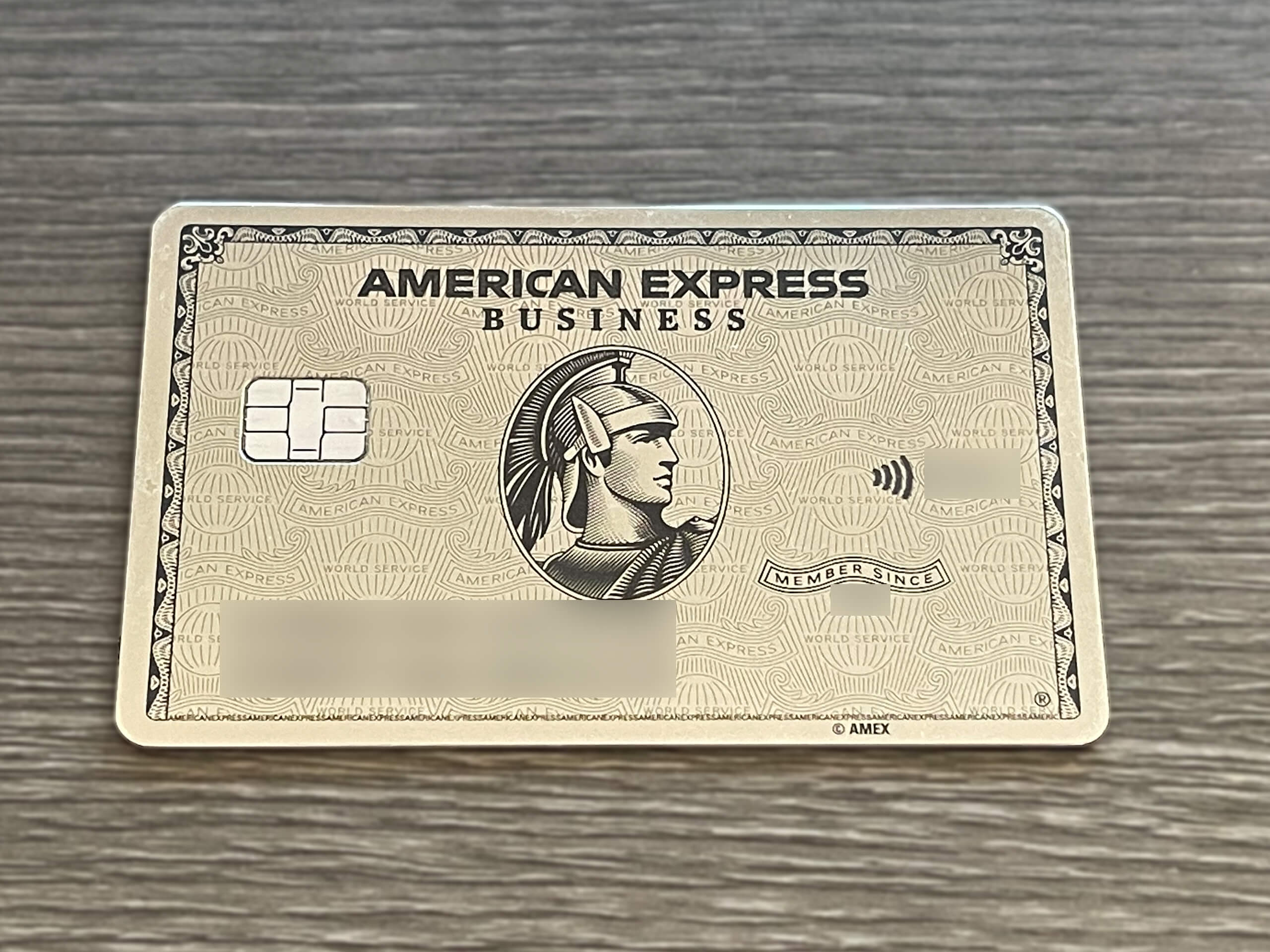
My advice: Use a regular LLC. Your name will be in the Operating Agreement and at the bank, but not necessarily in the public registry (which is standard in Wyoming anyway). That's enough privacy for most purposes and no obstacle when it comes to banking.
What Comes After Formation
The LLC is formed. You have your EIN. Now what? Formation is just the beginning. The really interesting steps come after.
Open a US Bank Account
With an LLC and EIN, you can open a business account in the US. There are two paths:
Online banks (neobanks). Mercury, Relay, and similar providers accept non-residents and allow fully remote account opening. The process usually takes 1-2 weeks, including identity verification. Mercury is particularly popular in the German LLC founder community because the onboarding process is lean and the support is geared toward international clients.
Traditional banks. Chase, Bank of America, or Wells Fargo typically require an in-person visit at a branch. That means: you have to travel to the US. The advantage is that traditional banks offer a broader product range and enable more credit options long-term.
For starters, I recommend Mercury or Relay. The account opens quickly, works for incoming and outgoing payments, and you don't need to be in the US.
Apply for an ITIN
The Individual Taxpayer Identification Number (ITIN) is your personal tax identification number in the US. You need it to apply for personal credit cards and to build a credit score.
The EIN is your LLC's number. The ITIN is your personal number. You need both.
You apply for the ITIN with the IRS using Form W-7. The easiest path for Germans is through a Certified Acceptance Agent (CAA). These are IRS-authorized individuals who verify your identity documents so you don't have to send your passport to the IRS.
There are some CAAs in Germany, and some tax advisors with a US focus offer the service as well. Costs range from $200-500. ITIN processing typically takes 6-10 weeks.
Build Credit
Once you have an ITIN, the actual process of building your US credit history begins. The typical path:
- Apply for a secured credit card. A credit card with a security deposit. You deposit, say, $500 and get a credit limit of $500. The risk for the bank is zero, which is why it's approved even without credit history.
- Pay on time. Pay the full balance every month. No exceptions. This builds your score.
- Wait for your FICO score. After about 6 months, your first FICO score is generated. It typically falls in the 680-720 range if you've been paying on time.
- Apply for better cards. With a score above 700, the doors open to the Chase Sapphire, Amex Platinum, business cards, and the cards with the big sign-up bonuses.
The entire process from LLC formation to your first premium credit card takes 8-14 months. You'll find a detailed overview in my guide to building US credit. That sounds long, and it is. But at the end, you have access to a credit system that's superior to the European one in virtually every respect.
Common Mistakes
Over the past few years, I've accompanied many Germans who set up a US LLC. Some mistakes keep coming up:
Choosing the wrong state. Delaware, because you read about it everywhere. Yet Wyoming is better and cheaper for 90% of cases. Changing states is possible but involves cost and effort.
Not consulting a tax advisor. The LLC gets formed, the first revenues come in, and then you realize you have to file tax returns in two countries and have no idea how. That gets expensive.
Treating the LLC as a tax-saving scheme. As described above: it doesn't work. CFC taxation kicks in, and anyone who tries it anyway risks trouble with the tax authorities.
Forgetting the annual report. In Wyoming, the oversight initially results in a late fee, and eventually the LLC is administratively dissolved. The bank account then becomes problematic.
Using a privacy LLC for banking. Banks like transparency. A layered privacy structure creates suspicion and can lead to accounts being closed.
Paying too much for the formation service. Some providers charge $2,000 or more for something you can get for $300-500. The more expensive packages often include services you don't need (website, logo, business plan template). The formation itself is standardized.
A Realistic Timeline
If you start the process today, here's the timeline you can expect:
Week 1-2: Choose a Registered Agent, file Articles of Organization, create the Operating Agreement.
Week 2-4: LLC is formed. Apply for EIN by fax with the IRS.
Week 4-8: EIN received. Open a US bank account (at Mercury or Relay, can be done in parallel).
Week 6-10: Apply for ITIN through a Certified Acceptance Agent.
Week 12-18: ITIN received. Apply for your first US credit card (secured card).
Month 6-8 after first card: FICO score available. Apply for premium and business cards.
Overall, about 10-14 months pass from the initial decision to a functioning US credit card. This can't be significantly accelerated because the wait times at the IRS set the pace.
Is the Effort Worth It
Everyone has to answer this question for themselves. For me, the US LLC has paid off in multiple ways: access to US banking, credit cards with sign-up bonuses and points programs that don't exist in Europe, and business flexibility in the world's largest market.
But it is effort. Formation costs, ongoing costs, tax advisors, paperwork. If you just want a single US credit card, you need to ask yourself whether the effort justifies the benefit. If you want to be active in the US business landscape long-term, you'll come to see the LLC as one of the best investments you've ever made.
What I can say with certainty: The process is doable. You don't need a US address, no Social Security Number, and no contacts on the ground. You need patience, a few hundred dollars, and the willingness to work through forms. The result is worth the journey.