US vs. German Credit Cards: What Really Sets Them Apart
 Christian··5 min read
I have credit cards in Germany and in the US. Not theoretically, not from reading about them, but actively used for several years. The German Amex Platinum, the US Amex Platinum, plus various business cards on both sides of the Atlantic. And I can tell you: They're two completely different worlds.
Most comparisons you find online barely scratch the surface. "There are more cards in the US." True. "The bonuses are higher." Also true. But why that is, what it concretely means, and where Germany actually comes out ahead is rarely explained. Here's my attempt to break it all down honestly and completely.
Welcome Bonuses: The First and Biggest Shock
If you apply for an Amex Platinum in Germany, you currently get a welcome bonus of around 50,000 to 75,000 Membership Rewards points. That's not bad. For the Amex Gold, it's often 40,000 to 50,000 points. For some promotional offers, you might even see 85,000 for the Platinum. That sounds generous, until you look across the Atlantic.
In the US, the Amex Platinum regularly offers 150,000 Membership Rewards points as a welcome bonus. With certain targeted offers, that goes up to 175,000 or even 200,000 points. The Chase Sapphire Preferred, a card with a $95 annual fee, frequently offers 60,000 to 80,000 Ultimate Rewards points. The Capital One Venture X starts at 75,000 miles. And these aren't exceptions; this is the normal state of affairs.
The difference isn't incremental. It's structural. US banks use welcome bonuses as an aggressive acquisition tool because the market is extremely competitive. In Germany, the premium segment essentially consists of Amex and maybe Miles & More credit cards. In the US, Chase, Amex, Capital One, Citi, US Bank, Barclays, and a dozen more issuers compete for the same customers. This competition drives bonuses upward.
What this means in practice: With a single US credit card application, you can earn more points than with two years of everyday spending on a German card. 150,000 MR points, transferred to an airline partner like ANA or Singapore Airlines, equals a business class flight from Europe to Asia. For one card opening.
Earning Rates: 1x on Everything vs. Categories
German credit cards typically earn one point per euro spent. Whether you're shopping at the supermarket, booking a flight, or renovating your office. One point per euro, flat, across all categories. The Amex Platinum gives 1.5 points at Amex Travel and 3 points on certain bookings, but those are exceptions within the ecosystem.
In the US, things look fundamentally different. The Chase Sapphire Reserve gives 3x points on restaurants and travel. The US Amex Gold gives 4x points at restaurants worldwide and US supermarkets. The Capital One Savor gives 4% cashback on dining and entertainment. The Chase Freedom Flex rotates quarterly categories with 5x points. And there are dozens more cards with specialized categories.
What this concretely means: A dinner for $100 in New York earns you 400 Membership Rewards points with the US Amex Gold. The same dinner for 100 euros in Frankfurt earns you 100 points with the German Amex Gold. Four times less for the same spending.
This category-spending model practically doesn't exist in Germany. The Payback Amex offers elevated points at Payback partners, but that's a closed system, not an open rewards program. If you want to maximize points with credit cards in Germany, you have one lever: spend more. In the US, you have two levers: spend more and use the right card for the right category.
Credit Limits: A Different Dimension
In Germany, a credit limit of 10,000 euros on a credit card is already the upper end for many banks. Even high earners and entrepreneurs rarely get more than 15,000 to 20,000 euros as a credit line. Amex charge cards, the Platinum and Centurion, have no preset spending limit, but that's a special case and not a true credit line.
In the US, credit limits of $20,000 to $50,000 on a single card are normal once you have an established credit history. Business cards regularly go above $50,000, sometimes well beyond. I have a single US business card with a limit above $80,000. To get a comparable limit in Germany, I'd probably have to appear at my bank in person and present extensive documentation.
There are several reasons for this. First, the US system is built on revolving credit. Banks earn from interest and therefore want to extend high limits. Second, risk assessment through the FICO score is more granular than the German Schufa system. And third, US banks are simply more aggressive in their credit extension, which has both advantages and disadvantages.
For entrepreneurs who run high monthly spending through cards, whether for advertising, software, or travel, the difference in limits is a real argument for US cards. If you want to put 30,000 euros per month through a card, you'll quickly hit the ceiling in Germany. In the US, that's standard business.
0% APR: Normal in the US, Nonexistent in Germany
One of the most remarkable features of the US credit card market is the 0% APR offers. Many US cards offer a period of 12 to 18 months on new purchases or balance transfers with no interest. Some cards even go up to 21 months. That means: You can make a larger purchase, pay it off in installments, and pay zero interest as long as you clear everything within the promotional period.
The Citi Simplicity regularly offers 21 months at 0% on balance transfers. The Chase Freedom Unlimited has 15 months at 0% on new purchases. The Amex Blue Cash Everyday offers 15 months at 0% on purchases and balance transfers. And these aren't obscure niche cards; they're mainstream products.
In Germany, this doesn't exist. German credit cards charge interest from day one on revolving balances, typically between 12% and 20% effective. Installment payment is available on some cards, but always with interest. An interest-free loan through the credit card, as is part of the business model in the US, simply does not exist in Germany.
For financially savvy users who want to manage their liquidity, these 0% offers are a real tool. Not for overconsumption, but for intelligent cash flow management. You buy the new office equipment today, pay it off over 15 months, and keep the capital in a savings account in the meantime. In the US, that's common practice. In Germany, it's not possible.
Sign-Up Bonus Churning: A Discipline of Its Own
In the US, an entire subculture has developed around credit card churning. The principle: You apply for a new card, meet the minimum spend for the welcome bonus, collect the points, use the card for a year, and then apply for the next one. The more systematic churners have accumulated millions of points over the years and fly exclusively in business and first class, funded by sign-up bonuses.
This works because the US market is large enough. There are dozens of relevant cards with attractive bonuses. Chase alone has five to six cards with welcome bonuses in the 60,000 to 100,000 point range. Amex has at least ten different personal and business cards with separate bonuses. Capital One, Citi, Barclays, US Bank add to that. An experienced churner can apply for five to eight new cards in a year and collect 500,000 to 800,000 points.
In Germany, that's not possible on this scale. The card selection is too small. In the Membership Rewards space, there's the Amex Gold, Platinum, Business Gold, Business Platinum, and maybe the Payback Amex. With Miles & More, there's a handful of cards. And Amex typically allows the welcome bonus only once per product. After five cards, you've exhausted the German market.
That's not a judgment call. Churning has its downsides: it requires discipline, can temporarily affect your credit score, and isn't for everyone. But having the option is an objective advantage of the US system.
Rewards Diversity: Four Ecosystems vs. One and a Half
In the US, there are four major, independent points programs tied to credit cards:
Chase Ultimate Rewards. Transferable to Hyatt, United, Southwest, British Airways, Air France/KLM, and more. The Chase Sapphire Reserve and Sapphire Preferred are the best-known cards in the program.
Amex Membership Rewards. Transferable to Delta, ANA, Singapore Airlines, British Airways, Hilton, and more. The same program as in Germany, but with significantly more cards feeding into it.
Citi ThankYou Points. Transferable to JetBlue, Turkish Airlines, Singapore Airlines, Virgin Atlantic, and more. Often overlooked, but with strong transfer partners.
Capital One Miles. Transferable to Turkish Airlines, Avianca LifeMiles, Air Canada Aeroplan, Emirates, and more. Capital One has massively expanded its transfer network in recent years.
In Germany, there's essentially Amex Membership Rewards and Miles & More. Both are good programs, no question. But the diversity is missing. If Amex worsens transfer rates or Miles & More adjusts its award chart, there's no real alternative. In the US, you simply switch to the next ecosystem.
This diversity also means: You can choose the optimal program for every trip. Want to stay at a Hyatt in Tokyo? Use Chase Ultimate Rewards. Want to fly ANA First Class? Use Amex MR or Virgin Atlantic (via Citi or Capital One). Want Turkish Airlines Business Class? You have Citi and Capital One as options. In Germany, you're tied to one or two programs and have to live with their terms.
Acceptance: 99% vs. 60-70%
In the US, American Express is accepted at an estimated 99% of all merchants that take credit cards. That wasn't always the case. Even ten years ago, there were significantly more gaps. But Amex has equalized merchant fees and run aggressive acceptance programs. Today, Amex is a non-issue in the US. You can pay with it at the diner, at the gas station, at the barber, everywhere.
In Germany, Amex acceptance is estimated at 60 to 70 percent of merchants that accept card payments. The major supermarkets are on board, as are the big hotels and restaurant chains. But Aldi, Lidl, dm, and many smaller shops don't take Amex. In rural areas, the rate drops significantly.
This has practical consequences. In the US, I can spend the entire day with my Amex Platinum without being declined once. In Germany, I always need a Visa or Mastercard as backup. Always. That's not a luxury problem; it's a structural limitation that diminishes the value of every German Amex card. Because every euro you have to redirect to the backup card is a euro on which you're not earning Amex points.
In my daily life in Germany, I estimate about 75% of my card transactions go through Amex and 25% through my Visa backup. In the US, I pay 100% with Amex (or another US card, depending on category). That 25% difference in lost points opportunities adds up substantially over a year.
Charge Card vs. Revolving Credit
The German Amex Platinum is a classic charge card. You get a monthly statement and pay the full amount. No partial payments, no interest, no credit in the traditional sense. Period.
The US Amex Platinum was historically also a charge card, but has shifted in recent years. Amex offers the "Pay Over Time" feature in the US, which allows you to pay amounts over $100 in installments. This makes the US Platinum effectively a hybrid card: charge card when you want, revolving credit when you need it.
Whether you see that as an advantage or disadvantage depends on your own financial philosophy. Those with discipline who value flexibility benefit from the option. Those who know themselves and recognize they'd be tempted by revolving credit are better served by the German charge card model.
Personally, I see the charge card approach as the healthier one. But having the option without being required to use it is objectively more than not having it at all.
Insurance: The Area Where Germany Leads
And here's a domain where the tables turn. German credit cards, particularly the Amex Platinum, have significantly better insurance packages than their US counterparts.
The German Amex Platinum offers international health insurance for travel, trip cancellation insurance, luggage insurance, purchase protection, and comprehensive rental car insurance. The terms are solid, coverage limits are sufficient for most travelers, and claims processing works in practice.
The US Amex Platinum also offers insurance, but the package is thinner. There's trip cancellation and trip delay insurance, car rental loss and damage insurance, and a purchase protection plan. But international travel health insurance, which is standard in Germany, is absent. That's due to the US healthcare system: Americans (hopefully) have their own health insurance, and credit card insurance doesn't replace it.
For a German who holds both German and US cards, this creates a clear division: insurance coverage through the German card, rewards through the US cards. That's one of the reasons why combining both systems is so compelling.
Purchase protection is also often better regulated with German cards. Longer timeframes, clearer terms, fewer exclusions. That may be because EU consumer protection regulations are stricter than their US counterparts. Whatever the reason: In the insurance department, the German credit card landscape has nothing to hide.
The Amex Platinum in Direct Comparison
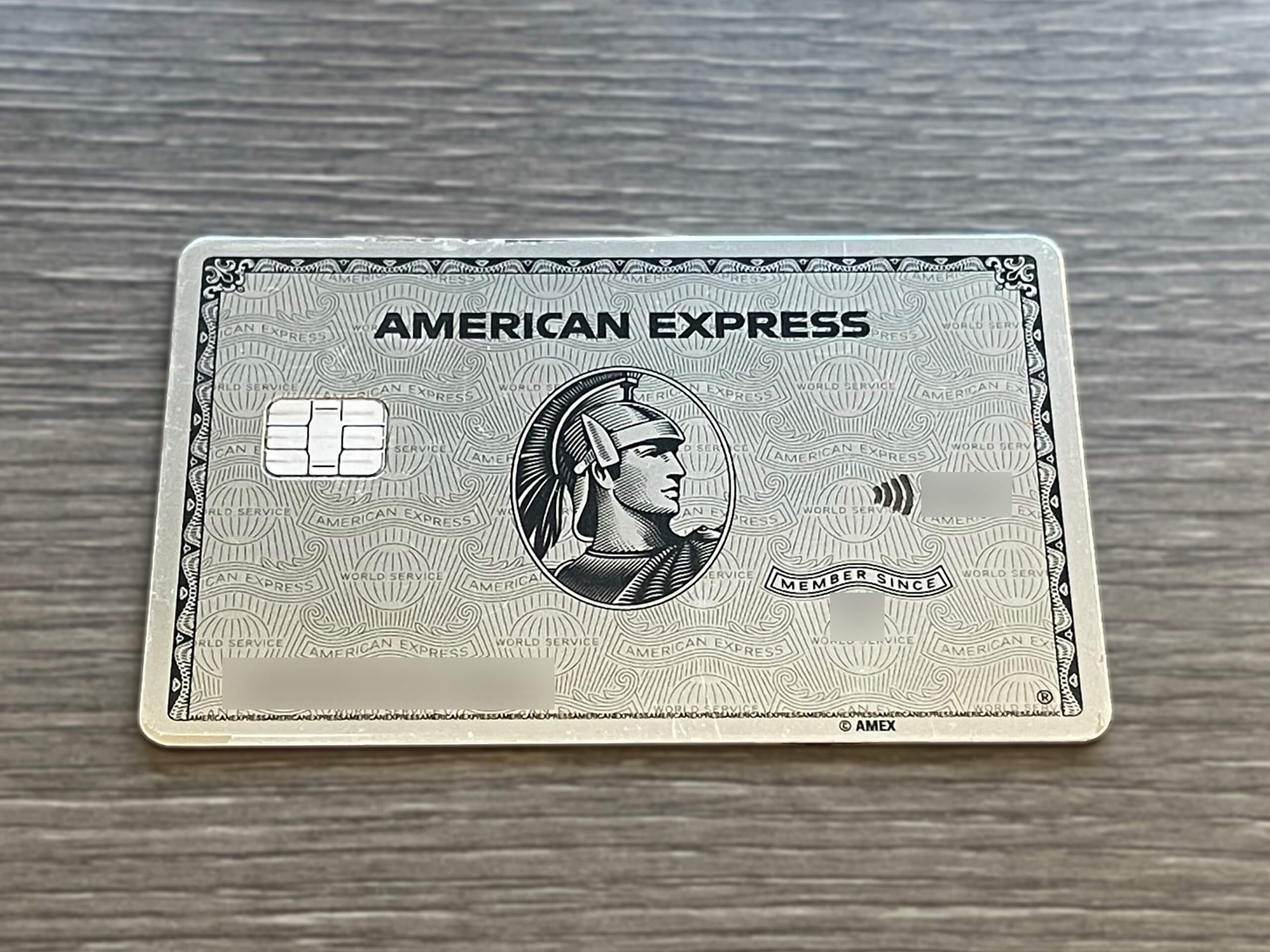
The Amex Platinum is the most obvious comparison since it exists in both countries and is nominally the same product. The reality looks different.
Annual fee. Germany: 720 euros. US: $895. Since the major refresh in September 2025, the US card is noticeably more expensive, but the overall package has changed accordingly.
Welcome bonus. Germany: 50,000 to 85,000 points (varies by promotion). US: 150,000 to 200,000 points. Clear advantage US.
Earning rate. Germany: 1 point per euro, 1.5 at Amex Travel. US: 5x on flights booked directly with airlines, 5x on prepaid hotels via Amex Travel, 1x on everything else. In the bonus categories, the US card is dramatically better.
Hotel Credit. Germany: 200 euro travel credit at Amex Travel. US: $600 per year at Fine Hotels + Resorts or The Hotel Collection. A significant upgrade from the previous $200 since the refresh.
Resy Dining Credit. Germany: Doesn't exist. US: $400 per year in dining credit through the Resy platform. One of the biggest additions from the September 2025 refresh.
Digital Entertainment Credit. Germany: Doesn't exist. US: $300 per year for streaming services ($25 per month for Disney+, Hulu, ESPN+, Peacock, New York Times, and more).
Lululemon Credit. Germany: Doesn't exist. US: $300 per year at Lululemon. New since the refresh, and a tangible value for customers who shop there regularly.
Uber Credit. Germany: Doesn't exist. US: $200 per year in Uber Cash ($15 per month, $20 in December). In cities with Uber availability, a direct value.
Airline Fee Credit. Germany: Doesn't exist in this form. US: $200 airline fee credit per year, redeemable at a chosen airline for baggage fees, seat upgrades, and similar. Not for flight tickets themselves, but a real value.
Oura Ring Credit. Germany: Doesn't exist. US: $200 per year for Oura Ring. Another new addition, leaning into the wellness direction.
Walmart+ Membership. Germany: Doesn't exist. US: Walmart+ membership worth approximately $155 per year, included.
Saks Fifth Avenue Credit. Germany: Doesn't exist. US: $100 per year at Saks Fifth Avenue ($50 semiannually). Niche, but a bonus for those who shop there.
SIXT ride Credit. Germany: 200 euros per year (eight installments of 25 euros each). US: Doesn't exist. A rare advantage for the German version.
Lounge access. Both: Priority Pass, Centurion Lounges, Delta Sky Clubs (US-specific with Delta boarding pass), Plaza Premium, and more. The US version has access to more lounge networks, simply because there are more in the US.
Hotel status. Germany: Hilton Gold, Marriott Gold, SIXT Platinum. US: Hilton Gold, Marriott Gold. SIXT status is missing in the US; Hilton and Marriott are identical.
Fine Hotels & Resorts. Both: Yes. Identical program, usable worldwide.
Insurance. Advantage Germany. More comprehensive coverage, better travel health insurance, solid rental car protection.
In total, the US Amex Platinum now offers over $2,400 in annual credits since the refresh. That exceeds the $895 annual fee several times over. In Germany, you're looking at 200 euros in travel credit, 200 euros in SIXT ride credit, 150 euros in restaurant credit, and 100 euros in Lodenfrey shopping credit, totaling 650 euros — and from 1 October 2026 the Lodenfrey credit requires a 200-euro minimum spend, so it is worth less than face value. The gap is no longer just substantial; it's a different order of magnitude.
Of course, credits are only valuable if you actually use them. Not everyone needs a Lululemon credit or an Oura Ring. But even if you only redeem half the credits, the effective annual fee of the US card sits deep in negative territory.
Rewards Redemption: Where Points Really Become Valuable
One area that's often overlooked in comparisons: The way you redeem points differs significantly between the two countries.
In the US, through Chase Ultimate Rewards, you can redeem points directly in the Chase Travel Portal at a 25% or 50% markup (depending on the card). 100,000 points become $1,250 or $1,500 in travel credit. This gives you a guaranteed minimum value, regardless of availability and sweet spots.
In Germany, you can redeem Membership Rewards points in the Amex travel portal, but the value is typically lower than transferring to airline partners. The transfer partners are similar in both countries (with slight differences in the network), but the US version has an additional option: Charles Schwab as a cashout at 1.1 cents per point directly into a brokerage account. That's an exit strategy that doesn't exist in Germany.
For someone who doesn't want to bother with sweet spots and airline transfers, US points programs offer more flexibility in redemption. For experienced points collectors, the transfer partners in both systems are strong, but the US system offers more options and more fallback possibilities.
Where Germany Works Better
It would be dishonest to write this comparison without the areas where the German system has advantages. Beyond the already-mentioned insurance, there are a few more points.
No foreign transaction fee as standard. The German Amex Platinum charges a 2% foreign transaction fee, but many German Visa and Mastercard cards (DKB, ING, C24) offer fee-free international use. In the US, this is also standard on premium cards (no foreign transaction fee), but many basic cards charge 3%.
Schufa instead of credit score. That initially sounds like a disadvantage, but the German system has an upside: You're not penalized for having no debt. In the US, you need active credit lines, regular use, and a long history to maintain a good score. In Germany, it's enough to have no negative entries. For people who fundamentally avoid debt, the German system is more comfortable.
Stability of terms. German credit card products change rarely and slowly. Amex Platinum terms stay largely stable for years. In the US, card terms, bonus categories, and credit limits change much more frequently. That can be positive (new bonuses) but also negative (suddenly lower earning rates or stripped benefits).
Customer service in German. A mundane but real point. If you have a problem with your German Amex, you call and speak German. With US customer service, you speak English, which shouldn't be a problem for most, but for complicated matters like insurance claims or dispute procedures, your native language can make a difference.
Why the Combination of Both Worlds Is Compelling
Now we get to the point that turns this comparison from an academic exercise into a practical consideration. As a German, you can have access to both systems. Not hypothetically, but for real.
The path runs through a US LLC and an ITIN. With a US business presence and an Individual Taxpayer Identification Number, you can apply for US credit cards and use the US credit system. This isn't a secret, not a gray area, and not an exploit. It's a legal, structured process that thousands of international entrepreneurs use.
And that's exactly where the combination gets exciting. Because you don't have to choose between systems. You can benefit from both.
German cards for: Insurance (better than US insurance), European acceptance (Visa/Mastercard as backup for Amex gaps), stability and simplicity, local customer service.
US cards for: Welcome bonuses (significantly higher), earning rates in categories (2x to 5x instead of 1x), higher credit limits, access to four different points programs, 0% APR offers for cash flow management.
In practice, this could look like: You keep your German Amex Platinum for insurance coverage, lounge access in Europe, and as your everyday card in Germany. In parallel, you use a US Chase Sapphire Reserve for 3x points on restaurants and travel, a US Amex Business Gold for 4x points on certain business categories, and regularly collect welcome bonuses on new US cards.
You transfer the points from your US cards to the same airline partners you use from Germany: ANA, Singapore Airlines, British Airways, United. You book flights the same way as with German MR points. The only difference: You have three to five times as many points.
The Tax Side
A note that can't be left out: Anyone who sets up a US LLC and uses US credit cards needs to understand the tax implications. US tax obligations, German CFC taxation, controlled foreign corporation rules, trade tax on foreign income. These are complex topics that require individual advice. No blog article replaces a tax advisor who specializes in international tax law.
The credit cards themselves are straightforward from a tax perspective. Rewards and points are treated as rebates in both countries, not as income. But the structure through which you acquire them (the LLC) has tax consequences that you should understand before taking the first step.
What I Take Away from This Comparison
After several years with cards in both systems, I've stopped trying to say one is better than the other. Both have their strengths, and those strengths are complementary, not competing.
The US system is built for growth, for optimization, for people who want to actively work with credit cards. More choice, more bonuses, more points, more flexibility. But also more complexity, more temptation, and more personal responsibility.
The German system is built for simplicity and security. Less choice, but solid products. Better insurance, less aggressive credit extension, more stable terms. Duller, but also less risky.
Anyone who lives in only one system misses the advantages of the other. Anyone who uses both gets the best of both worlds: the security and insurance from Germany, the rewards and flexibility from the US.

Conclusion
The difference between US and German credit cards isn't marginal. It's fundamental. In almost every measurable area, from welcome bonuses to earning rates to credit limits and rewards diversity, the US system is ahead. Sometimes narrowly, usually by a wide margin.
But "ahead" doesn't mean "better for everyone." If you live in Germany, rarely travel, and simply want a solid credit card with good insurance coverage, a German Amex Platinum or Gold serves you perfectly well. The effort of building a US credit history isn't worth it for that person.
But for those who work internationally, travel regularly, have a business with US ties, or simply want to get the maximum out of their credit card setup, looking across the Atlantic isn't optional; it's necessary. The numbers speak a clear language: 150,000 points welcome bonus instead of 50,000. 4x points on categories instead of 1x on everything. Credits that exceed the annual fee. Four different points programs instead of one and a half.
It's not a question of better or worse. It's a question of how much potential you want to unlock. And whether you're willing to invest the effort to access it.