Fine Hotels & Resorts Review 2026: Is It Worth It?
 Christian··5 min read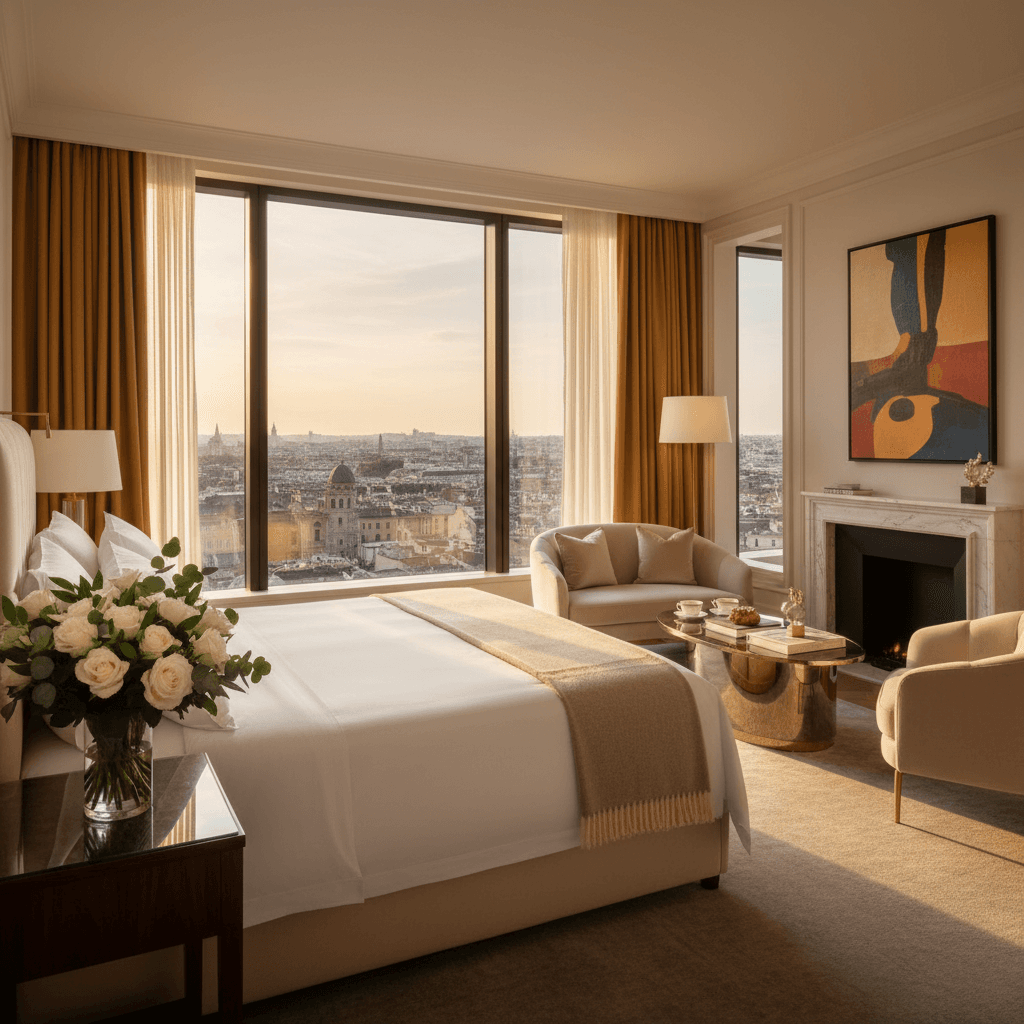
Fine Hotels & Resorts is the hotel program from American Express that guarantees Platinum and Centurion cardholders additional benefits when booking through Amex Travel. The promise sounds good. The reality is more nuanced.
After over five years of regular FHR use, a pretty clear picture has emerged of when the program is worth it, when it is not, and which hotels actually deliver. This is not an advertisement for American Express. It is an honest assessment.
What FHR guarantees
Every FHR booking includes five benefits, regardless of the room category chosen:
- Room upgrade when available at check-in
- Breakfast for two people, daily
- Early check-in (from 12 PM, subject to availability)
- Guaranteed late checkout at 4 PM
- An Experience Credit of 100 USD (equivalent in local currency), redeemable for spa, restaurant, minibar, or other hotel services
That sounds like a lot. And in total, it is. But every single point has nuances you should know about.
The upgrade promise: Theory and practice
"Room upgrade at time of check-in, when available." This sentence is the most important in the entire FHR program, and simultaneously the most misunderstood.
What it means: the hotel will try to give you a better room than what you booked. What it does not mean: you automatically get a suite or a room with an ocean view.
The experience of many cardholders after numerous FHR bookings shows: the quality of the upgrade depends massively on the individual hotel. There are hotels that take the program seriously and treat FHR guests like VIPs. And there are hotels that give you the worst available room of a marginally higher category and call it an "upgrade."
In practice, it looks like this: some hotels provide a genuine category upgrade, for example from a Classic Room to a Superior Room. The staff is informed, check-in is smooth, and the Experience Credit is applied without being asked. At other properties, the "upgrade" consists of receiving the same room on the third floor instead of the booked room on the second floor. Same size, same furnishings, just one floor higher. Technically an upgrade, practically a disappointment.
The rule of thumb: traditional grand hotels with a long history almost always deliver on FHR. Design hotels and newer boutique properties are less predictable.
Well-known FHR hotels in Europe
Based on cardholder reports and general experience with the FHR program, certain hotels are considered particularly reliable.
Paris: Le Bristol is regarded as consistently good with upgrades and treats FHR guests with genuine respect. The Shangri-La is also frequently recommended, especially the rooms with an Eiffel Tower view if you are lucky. The Park Hyatt Paris-Vendome is a solid choice, particularly because breakfast there normally runs 55 EUR per person. For two people over three nights, you save 330 EUR on breakfast alone.
London: The Connaught in Mayfair is very popular among FHR users. Upgrades here are frequently substantial, the staff is attuned to FHR guests, and the Experience Credit works wonderfully in the restaurant or bar. Claridge's also delivers consistently. The Savoy is also in the program and a reliable pick, though upgrades there are less often spectacular.
Rome: The Hotel de Russie at Piazza del Popolo is considered one of the best FHR options in Rome. The location is perfect, breakfast in the garden is particularly valued, and upgrades reportedly tend to be fair. Hotel Eden offers one of the best rooftop terraces in the city, and the Experience Credit for dinner up there is money well spent.
Barcelona: Caution is warranted when it comes to expectations here. The Mandarin Oriental typically delivers, as does the Hotel Arts. But the upgrade culture in Barcelona is generally less pronounced than in Paris or London. Anyone booking through FHR here should set their expectations for upgrades fundamentally lower.
The booking process
FHR bookings are made exclusively through Amex Travel. You can do this through the website, the app, or by phone through the concierge. Important: you cannot book FHR rates directly with the hotel. It only works through the Amex channel.
This also means: you do not earn hotel chain points for the stay itself on FHR bookings. If you collect Hilton Honors or Marriott Bonvoy points, you need to be aware that the FHR stay does not count as a qualifying stay. You do receive the status benefits (if you have Hilton Gold or Marriott Gold through the Amex), but no points for the room rate.
And here is a point many people miss: you still earn Membership Rewards points. On the Centurion card, that is 1.5 points per euro; on the Platinum, 1 point per euro. On a hotel booking of 2,000 EUR for three nights, you collect 3,000 MR points (Centurion) or 2,000 MR points (Platinum).
When FHR pays off and when it does not
This is the key question. And the answer is not as simple as "FHR is always cheaper" or "FHR is always more expensive."
The FHR rate is the hotel's so-called "Best Available Rate," sometimes slightly above it. In some cases, the FHR rate is identical to the price you would get booking directly with the hotel. In other cases, it is 10-20% higher.
But: the FHR benefits have real monetary value. Let us do the math with a specific example.
Three nights at Le Bristol Paris. FHR rate: 1,450 EUR per night. Direct booking through the hotel: 1,350 EUR per night.
At first glance, you pay 300 EUR more through FHR for three nights (3 x 100 EUR premium).
What you get in return:
- Breakfast for two, three days: value approx. 330 EUR (55 EUR per person per day)
- Experience Credit 100 USD (approx. 92 EUR)
- Guaranteed late checkout: hard to quantify, but valuable on the last day
- Room upgrade: variable, but potentially worth several hundred euros
Total value of FHR benefits: at least 420 EUR, realistically closer to 500-600 EUR with the upgrade.
Against the 300 EUR premium, you are getting at least 420 EUR in benefits. FHR wins.
But: if the hotel is running a special promotion, offering a prepaid rate 30% below the standard rate, or if you book through a platform with cashback, the math can tip. FHR is not automatically the best option. You have to do the calculation every time.
Another situation where FHR makes less sense: short one-night stays. Breakfast only applies once, late checkout brings less value, and you only enjoy the upgrade for one night. Starting at two nights, FHR almost always becomes attractive. At three nights, it is usually a clear win.
Tips from practice
At check-in: Always mention that you booked through FHR. Not all hotels automatically flag this in their system. A friendly note that it is a Fine Hotels & Resorts booking can make the difference between a real upgrade and a standard room.
Experience Credit: The 100 USD can be used flexibly at most hotels. Restaurant, spa, minibar, room service. My tip: ask at check-in how the credit is applied. Some hotels deduct it automatically from the final bill, others require you to explicitly request it. At some hotels, you can also use the credit for laundry service.
Timing the booking: FHR rates are usually cancelable up to 24-72 hours before arrival. That gives you flexibility. I often book early through FHR and then monitor whether the price drops or whether the hotel offers a better rate directly. If so, I cancel the FHR booking and book direct.
Centurion vs. Platinum on FHR: The FHR benefits are identical for both cards. The difference lies in the concierge service during booking (the Centurion concierge can sometimes push through special requests that are not possible through the regular Amex Travel channel) and in the MR points you earn.
FHR for special occasions
A use case that is often overlooked: FHR is exceptionally well suited for special occasions. Birthdays, anniversaries, honeymoons. The reason is simple. The combination of a guaranteed upgrade, breakfast, and Experience Credit turns an already planned hotel stay into an experience that feels more upscale than the room rate alone would suggest.
With an FHR booking for a special occasion at a good hotel, you often get an upgrade to a better room, breakfast is included every morning, and the Experience Credit can be used for dinner at the hotel restaurant. Without FHR, the same experience would easily cost 500 EUR more.
The Centurion concierge can provide additional help for such occasions: arrange a bottle of champagne in the room, reserve a table at the best restaurant in the city, or secure a spa appointment at the preferred time. That goes beyond what FHR alone offers, but the combination of an FHR booking and concierge support is hard to beat for special occasions.
FHR compared to other programs
FHR is not the only program that provides extra benefits on hotel bookings. It is worth knowing the alternatives.
Virtuoso: A travel advisor network that offers similar benefits to FHR. Upgrades, breakfast, hotel credits. The advantage of Virtuoso: you book directly with the hotel and therefore earn hotel points. The disadvantage: you need a Virtuoso travel advisor, and not every one is equally engaged. If you have a good Virtuoso advisor, you often come out ahead compared to FHR because the booking counts as a direct booking.
Hilton Impresario: Similar to FHR, but only for Hilton hotels (Waldorf Astoria, Conrad, LXR). The benefits are comparable. Advantage: you earn Hilton points. Disadvantage: a much smaller selection than FHR.
Leading Hotels of the World (Leaders Club): Free membership, upgrades and credits at select hotels. The benefits are less guaranteed than with FHR, but the hotel selection is interesting, with many independent luxury hotels that are not part of the major chains.
The conclusion after years of use: FHR is the most consistent program. You know what you are getting, the benefits are guaranteed, and the booking process is straightforward. Virtuoso can be better but depends on the advisor. And the other programs are nice supplements but not substitutes.
What I would like to see from FHR
The program is good but not perfect. What I would like to see: better labeling of hotels that actually provide substantial upgrades. Right now, it is trial and error. Some sort of rating system or experience reports within the Amex app would be helpful.
Also: the Experience Credit of 100 USD has been unchanged for years. At a five-star hotel in Paris or London, that covers dinner for one person. Maybe. An adjustment to reflect rising hotel prices would be appropriate.
And finally: the ability to earn hotel points on FHR bookings. That would be the one factor that would make FHR the undisputed market leader. As long as you have to choose between FHR benefits and hotel points, the decision for each stay remains an individual calculation.
Still: FHR is one of the benefits that most clearly justify the Platinum and Centurion annual fees. If you regularly stay at five-star hotels and know the program, you extract more value than with almost any other booking method. You just have to know which hotels are worth it. And be willing to do the math each time.