Premium Credit Cards: 10 Mistakes to Avoid in 2026
 Christian··5 min read
A premium credit card is a tool. Like any tool, it's not ownership that determines the value, but how you use it. I've been watching the mistakes cardholders make for years. Some of them I made myself. Some I see regularly in others. All of them cost money, time, or nerves that could have been avoided.
Here are the ten most common mistakes I know of. Concrete, with examples.
1. Paying the annual fee without using the benefits
The most fundamental mistake. You pay 720 euros for the Platinum but don't use the lounge access, the travel credit, the hotel status, or the insurance. The card is your payment method, nothing more.
I know someone who had the Platinum for three years and entered a lounge exactly twice during that time. He never claimed the 200-euro travel credit because he didn't know it existed. He never checked the insurance, so he took out a separate travel insurance policy on top. Over three years, he paid 2,160 euros in annual fees and got maybe 300 euros in value out of it.
What to do instead: Sit down once, right after you receive the card, and make a list of all the benefits. Check which ones you'll realistically use. If the math doesn't work out, the card is the wrong one for you. If it does, check off the benefits throughout the year. It sounds bureaucratic, but it's the difference between a 720-euro investment and a 720-euro loss.
2. Redeeming points for vouchers instead of transferring them
This mistake costs most cardholders hundreds of euros per year without them even noticing.
Membership Rewards points have different values depending on how you redeem them. If you redeem them directly for Amazon vouchers or merchandise, you typically get 0.3 to 0.5 cents per point. If you transfer them to airline partners and redeem for award flights, the value is 0.8 to 2.0 cents per point. With particularly good redemptions, like business or first class on partner airlines, it can even reach 3 to 5 cents.
A concrete example: 50,000 Membership Rewards points.
- Redeemed as an Amazon voucher: 200 euros
- Transferred to British Airways and redeemed for a short-haul flight in Europe: roughly 400 to 500 euros in value
- Transferred to Singapore Airlines and redeemed for a business class flight: roughly 1,000 to 1,500 euros in value
That's not a marginal difference. That's the difference between a mediocre deal and an excellent one. Yet most cardholders redeem their points for vouchers because it's easier.
What to do instead: Collect points and transfer them to airline partners when you have a specific flight to book. The 1:1 transfer rate to partners like British Airways Avios, Singapore Airlines KrisFlyer, or ANA Mileage Club is almost always the better deal.
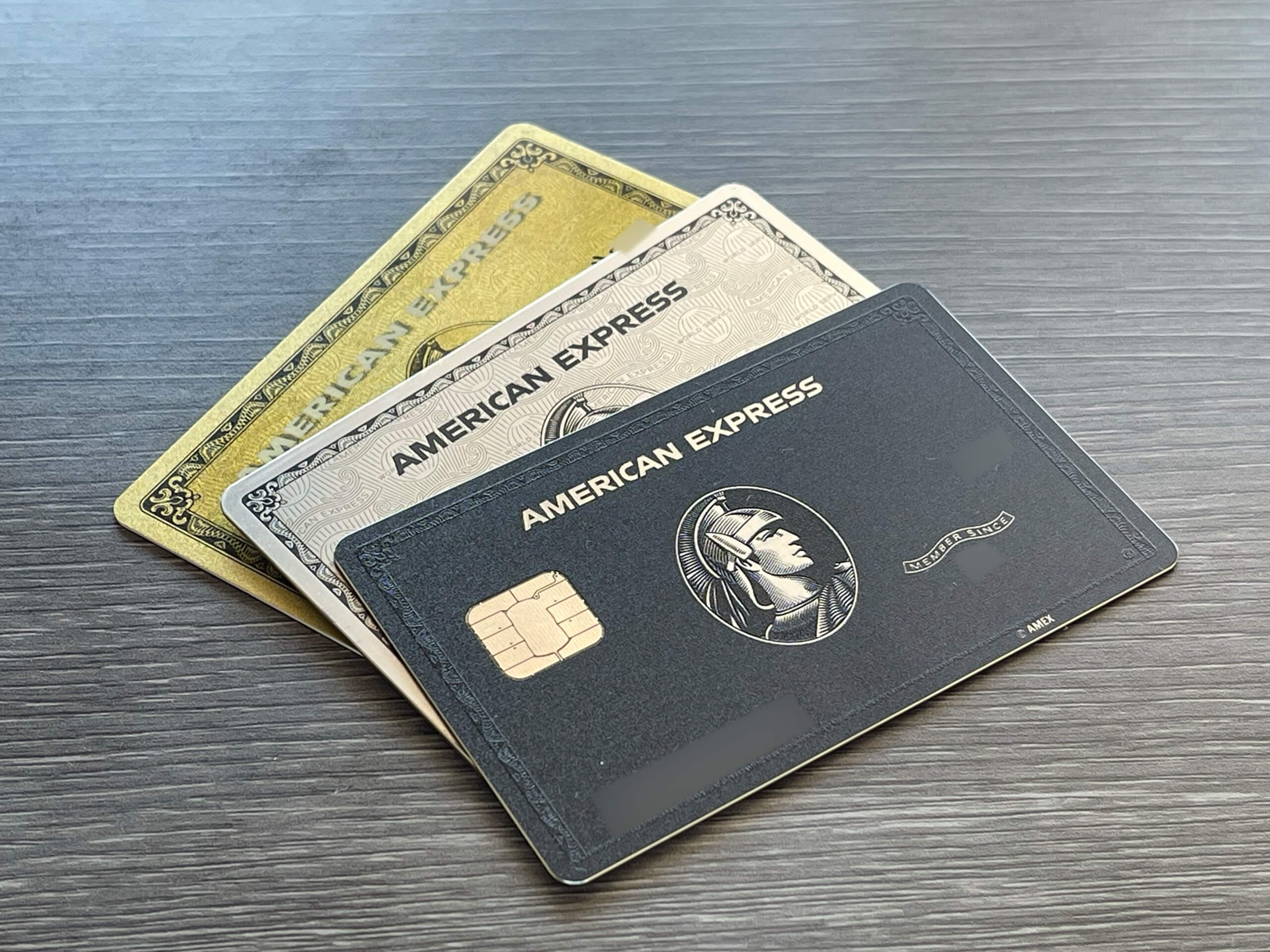
3. Having only one card (the acceptance problem)
In Germany, Amex is not universally accepted. Anyone who only carries an Amex card regularly ends up at the register needing to pay with cash. That's not just inconvenient, it also means you're earning no points on those transactions.
I made this mistake myself. In my first year with the Platinum, I had no backup card. At the gas station, at dm, at the tradesperson's, at smaller online shops: no Amex. I estimate I was unable to process 30 to 40 percent of my spending through the Platinum.
What to do instead: Pair your Amex with a Visa or Mastercard with no annual fee. The DKB Visa, the Hanseatic Bank GenialCard, or similar products cost nothing and cover the gaps that Amex has in Germany. Ideally, you use Amex as your primary card (for points) and the Visa only where Amex isn't accepted.
4. Not knowing your own insurance coverage
The insurance is one of the most valuable components of a premium card. But it only helps if you know it exists and what it covers.
I regularly hear from Platinum holders who separately purchased a trip cancellation insurance policy. The Platinum has one built in. Or people who paid out of pocket after a rental car accident even though the Platinum's rental car insurance would have covered it. Or cardholders who wrote off a stolen bag without knowing that the card's purchase protection would apply.
A concrete example from my own experience: I bought a tablet on a trip that broke two weeks later. The retailer refused to exchange it. I used my card's purchase protection and got the full purchase price back. 650 euros that I would have otherwise written off.
What to do instead: Download your card's insurance terms and read through them once. Not every page, but the overview: what's covered? Up to what amount? What deadlines apply? What exclusions are there? This knowledge can save you thousands of euros in an emergency.
5. Letting credits expire
The Platinum offers 200 euros in travel credit per year, 200 euros in SIXT ride credit (eight installments of 25 euros each), 150 euros in restaurant credit, and occasionally other time-limited credits. All of these credits have an expiration date. If you don't use them, they're gone.
The travel credit expires at year-end. If you haven't booked through Amex Travel by November, you have to scramble in December. Some people then book a flight or hotel they would have needed anyway, just moved up the timeline. Others let the 200 euros lapse.
The SIXT ride credit is split into eight installments of 25 euros each. Each installment has an expiration date. If you don't use it, it's gone. Not transferable, not recoverable.
What to do instead: Put the expiration dates in your calendar. It sounds obvious, but it's the simplest way to avoid leaving money on the table. Beginning of the year: plan the travel credit. Regularly: check SIXT ride credit and restaurant credit.

6. Ignoring Amex Offers
Amex Offers are personalized discount promotions that appear in your Amex account. Typical examples: "Get 50 euros back on a 200-euro spend at merchant X" or "10% cashback when booking through platform Y." You have to actively unlock the Offers in your account before making the purchase.
Most cardholders log in, see the Offers, think "I'll do it later," and forget about it. Over the course of a year, they leave 200 to 500 euros on the table. Not hypothetically, but real cashback deals that only needed to be activated.
An example: last year there was an Amex Offer for a fashion retailer where I regularly order. 30 euros back on a 150-euro spend. I would have spent the 150 euros anyway. The 30 euros was free money. But only because I activated the Offer beforehand.
What to do instead: Log into your Amex account at least once a week and check the current Offers. Activate everything that fits your normal spending behavior. It takes two minutes and can be worth several hundred euros over the year.
7. Applying for too many cards at once
In the credit card community, there's a trend called "churning": applying for many cards, pocketing the welcome bonuses, canceling the cards, and applying for new ones. In the US, it's a hobby in its own right. In Germany, it works far less well, and it has side effects.
Every credit card application triggers a Schufa inquiry. Many inquiries in a short period lower your Schufa score. A poor Schufa score can cost you money on a mortgage, a rental agreement, or other credit applications. The 500 euros in welcome bonus from a card are nothing compared to a mortgage interest rate that's 0.3 percentage points higher.
On top of that: American Express evaluates new customers differently from long-standing ones. If you frequently apply for and cancel cards, you'll be flagged as a "bonus hunter." The likelihood of being considered for attractive offers in the future drops. And if you're hoping for a Centurion invitation long-term, this behavior actively hurts your chances.
What to do instead: Pick two to three cards that fit your spending behavior and stick with them. Long-term customer relationships are worth more in the Amex ecosystem than short-term bonuses.
8. Using installment payments (the interest trap)
Amex and other card issuers offer the option of paying your monthly card balance in installments. It sounds convenient. It's a trap.
Interest rates on revolving credit card debt typically run at 15 to 22 percent per year. If you pay down a balance of 5,000 euros over six months, you pay 375 to 550 euros in interest. That's more than the value of the Membership Rewards points you earned on the original spending. You haven't just failed to gain an advantage, you've actively lost money.
A concrete example: someone buys a watch for 3,000 euros on the Platinum, earns 3,000 MR points (value: about 30 to 60 euros), and pays off the amount over six months. Interest: roughly 225 to 330 euros. Net result: minus 170 to 300 euros.
There's a side effect many underestimate: the switch from transactor to revolver is a warning sign in issuers' risk models, and one of the most common reasons Amex cuts a credit limit.
What to do instead: Always pay your credit card statement in full and on time. If you can't pay the full amount, you've spent too much. A premium credit card is for people who have their spending under control. Installment payments and premium cards don't go together.

9. Not linking status benefits
The Platinum comes with Hilton Gold and Marriott Gold. But these status levels aren't automatically activated in your hotel accounts. You have to link your Amex card with your loyalty program accounts. If you don't, you'll stay as a guest with no status even though you're entitled to breakfast, upgrades, and bonus points.
I once met a Platinum holder who had spent a year staying at Hilton hotels without using his Gold status. He didn't know he had it. Estimated lost value: 400 to 600 euros in breakfast and upgrades.
The same goes for SIXT. Platinum status at SIXT has to be activated through the Amex website. If you don't, you're renting as a regular customer without upgrades or priority treatment.
What to do instead: Create accounts at Hilton Honors, Marriott Bonvoy, and SIXT if you don't have them already. Link your Amex card through the relevant pages on the Amex website or in the app. It takes ten minutes and stays active permanently.
10. Canceling the card without transferring points
When you cancel your Amex card, your Membership Rewards points expire. Not after a grace period. Immediately. Anyone who has collected 80,000 points and cancels the card without transferring the points first loses a value of 640 to 1,600 euros.
This happens more often than you'd think. Someone gets annoyed about a fee increase, calls up, cancels, and realizes three days later that the points are gone. Amex generally doesn't restore them.
A particularly painful example: an acquaintance had collected 120,000 MR points over four years. He switched to the Business Platinum and canceled his personal Platinum at the same time. What he didn't know: the points were tied to the personal card and weren't automatically transferred to the Business account. 120,000 points, worth 960 to 2,400 euros depending on redemption, were gone.
What to do instead: Before you cancel an Amex card, transfer all Membership Rewards points to an airline partner. British Airways Avios, Singapore Airlines KrisFlyer, whichever partner. Transferred points belong to you and don't expire when the card is canceled. Alternatively, if you're keeping another MR-eligible Amex card (like the Gold), the points are sometimes consolidated. But verify this with Amex beforehand; don't rely on assumptions.
The common thread
All ten mistakes share one thing: they stem from passivity. From the feeling that a premium card delivers value on its own, simply because you have it. It doesn't. A premium card delivers value when you actively use its benefits, understand its mechanics, and adjust your behavior accordingly.
This isn't a full-time job. They're small habits: checking Amex Offers once a week, reviewing FHR options before every trip, keeping the insurance terms in mind, not letting points expire. Together, these habits make the difference between a cardholder who pays 720 euros for a piece of metal and one who turns the same 720 euros into an investment with a multiple return.
Not a single one of these mistakes is hard to avoid. But all of them require you to sit down once and set up your system. After that, it runs. The ten minutes for linking your status. The two minutes a week for the Offers. The calendar entry for the credits. These aren't major efforts. But they separate the cardholders who extract full value from those who fund an expensive habit.