Amex Acceptance in Germany 2026: Where It Works
 Christian··5 min read
Anyone who uses an Amex in Germany knows this moment. You're standing at the register, hold out your card, and the cashier's expression says it all before they even finish the sentence: "We don't accept American Express, I'm afraid."
This has been happening to me regularly for years. Less often than it used to, but frequently enough that I never leave the house without a backup card. Amex acceptance in Germany is an issue that affects every cardholder, and there's surprisingly little honest conversation about it. Amex itself communicates progress, but the reality at the point of sale is more nuanced.
The Reality in Numbers
My personal estimate after years with the card: in major German cities like Hamburg, Munich, Berlin, and Frankfurt, the acceptance rate is roughly 60 to 70 percent. That sounds like a lot, but it means that about every third transaction doesn't go through. In smaller cities, the rate drops to maybe 40 to 50 percent. In rural areas, it can fall below 30 percent.
Internationally, the picture looks much better. In the US, Amex is accepted almost everywhere. In the UK, the Netherlands, Scandinavia, and large parts of Asia, I rarely have issues. Germany, along with parts of Southern Europe, is one of the toughest countries for Amex users.
Where Amex Works Well
There are areas where I can rely on Amex. Over the years, a clear pattern has emerged.
Large Supermarket Chains
Rewe accepts Amex. Edeka does in many, but not all, locations. It depends on whether the store is independently operated or directly managed by Edeka's headquarters. Independent Edeka merchants decide on their own payment methods, and some decline Amex. At Rewe, I haven't had a single rejection in the past two years.
Aldi now accepts Amex. Lidl, however, does not. Neither do Penny or Netto. If you primarily shop at discount supermarkets, it's a mixed picture.
Hotels and Airlines
This is the showcase category. Virtually every hotel chain accepts Amex: Marriott, Hilton, IHG, Hyatt, Accor. Most independent hotels in the upscale category do as well. Occasional issues come up at small guesthouses or vacation rentals, but that's the exception.
Airlines accept Amex without exception. Lufthansa, Eurowings, Ryanair, Emirates, all of them. Booking platforms like Booking.com, Expedia, and Hotels.com work without issues too.
Gas Stations
Aral and Shell accept Amex reliably. There can be exceptions at Total and smaller gas station chains, but the major ones work.
Online Shopping
Amazon accepts Amex. Zalando, About You, MediaMarkt, Saturn, most large online shops. Apple, Google, and the common streaming services as well. At smaller online shops, especially niche German retailers, you'll sometimes find only Visa, Mastercard, PayPal, or Klarna.
Restaurants in Major Cities
In Munich, Hamburg, Berlin, and Frankfurt, most restaurants above a certain price point accept Amex. I'd say once the average check exceeds about 50 euros per person, the odds are good. The more upscale the restaurant, the more certain the acceptance. Tantris in Munich, Überfahrt at Tegernsee, Aqua in Wolfsburg: Amex everywhere.
Where It Consistently Fails
Just as clear as the positive list is the negative list. Some areas are Amex-free zones, and that's unlikely to change much in the coming years.
Bakeries and Takeaway Stands
Virtually no bakery in Germany accepts Amex. Many don't accept any credit card at all. If you pick up rolls at the bakery in the morning, you need either cash or a debit card. Even at bakeries that offer card payment, Amex is almost never an option.
It's similar at takeaway places: kebab shops, currywurst stands, Asian food stalls. Most operate on cash only, some accept debit cards. Amex is not in the picture here.
Small Tradespeople and Service Providers
The plumber, the electrician, the dry cleaner around the corner. These businesses rarely accept Amex. Many still work with invoices and bank transfers, some take debit cards, but credit cards and especially Amex are the exception.
Doctor's Offices and Medical Providers
Co-pays at the doctor, prescription fees, physiotherapy, osteopathy. These are handled almost exclusively with cash, debit card, or invoice. I've never seen a doctor's office in Germany that accepts Amex.
Government Offices and Public Institutions
Vehicle registration, driver's license office, citizens' service bureau. In the rare cases where card payment is even possible, it's limited to debit cards. Amex is not in the picture here.
Discount Stores and Drugstores
Aldi now accepts Amex. Lidl, Penny, and Netto do not. dm accepts Amex, partly as a Payback partner. Rossmann partially accepts credit cards, but Amex acceptance is not consistent.
Why Merchants Decline Amex
The problem has a clear economic reason: merchant fees. When a customer pays with a debit card, the merchant typically pays 0.2 to 0.3 percent of the transaction as a fee. For Visa and Mastercard, the interchange fee has been capped at 0.3 percent for credit cards since EU regulation, plus the payment processor's fee, coming to roughly 0.7 to 1.0 percent total.
With American Express, it's different. Amex acts as its own payment processor and negotiates fees directly with merchants. The typical range is 1.5 to 3.0 percent, depending on the industry and the merchant's negotiating leverage. For some merchants, even higher.
For a supermarket with margins of maybe 2 to 3 percent on groceries, an Amex fee of 2 percent is a serious problem. For a luxury hotel with margins of 30 percent and above, the fee barely registers. That explains why upscale dining and hotels almost always accept Amex, while low-margin businesses wave it off.
Amex argues that their cardholders spend more on average and are therefore profitable for merchants despite the higher fees. That may be true in theory. In practice, many small merchants still decide against it.
The Apple Pay Trick
Here's a detail many Amex users don't know: if you've added your Amex to Apple Pay or Google Pay and pay contactlessly, some terminals will process the payment even though the merchant doesn't officially accept Amex.
This works because some payment terminals are configured to accept contactless NFC payments broadly, without distinguishing between card networks. The merchant may have only activated Visa and Mastercard, but the terminal routes the Amex transaction through anyway.
I've experienced this several times. At an organic food store in Hamburg that only listed Visa and Mastercard on its sticker, paying via Apple Pay with my Amex went through without a hitch. Same at a small wine shop in Munich.
It doesn't work every time or everywhere. Some terminals are strictly configured and decline Amex even contactlessly. But it's worth trying before you reach for your backup card. Simply hold your iPhone or Apple Watch to the terminal. If it goes through, great. If not, you pay with the Visa.
One note: whether the merchant eventually notices the higher fee and complains is another question. I've never received any pushback.
My Backup System
I don't leave the house without a backup card. After years with Amex in Germany, that's a firm rule. My setup: Amex as the primary card for everything that accepts it, and a DKB Visa Debit for the rest. The right card combination makes all the difference.
The DKB Visa Debit has the advantage of being free, accepted worldwide, and charging no foreign transaction fees. It's the perfect complement to Amex. Everything Amex can't do, the Visa handles.
In practice, that means I always try to pay with Amex first. If that doesn't work, the Visa comes out. This requires carrying both cards, which is no issue with two physical cards. Since I've added both to Apple Pay, I rarely need the physical cards in everyday life anyway.
Moments Where It Got Awkward
There are moments when the lack of Amex acceptance is more than just a minor annoyance.
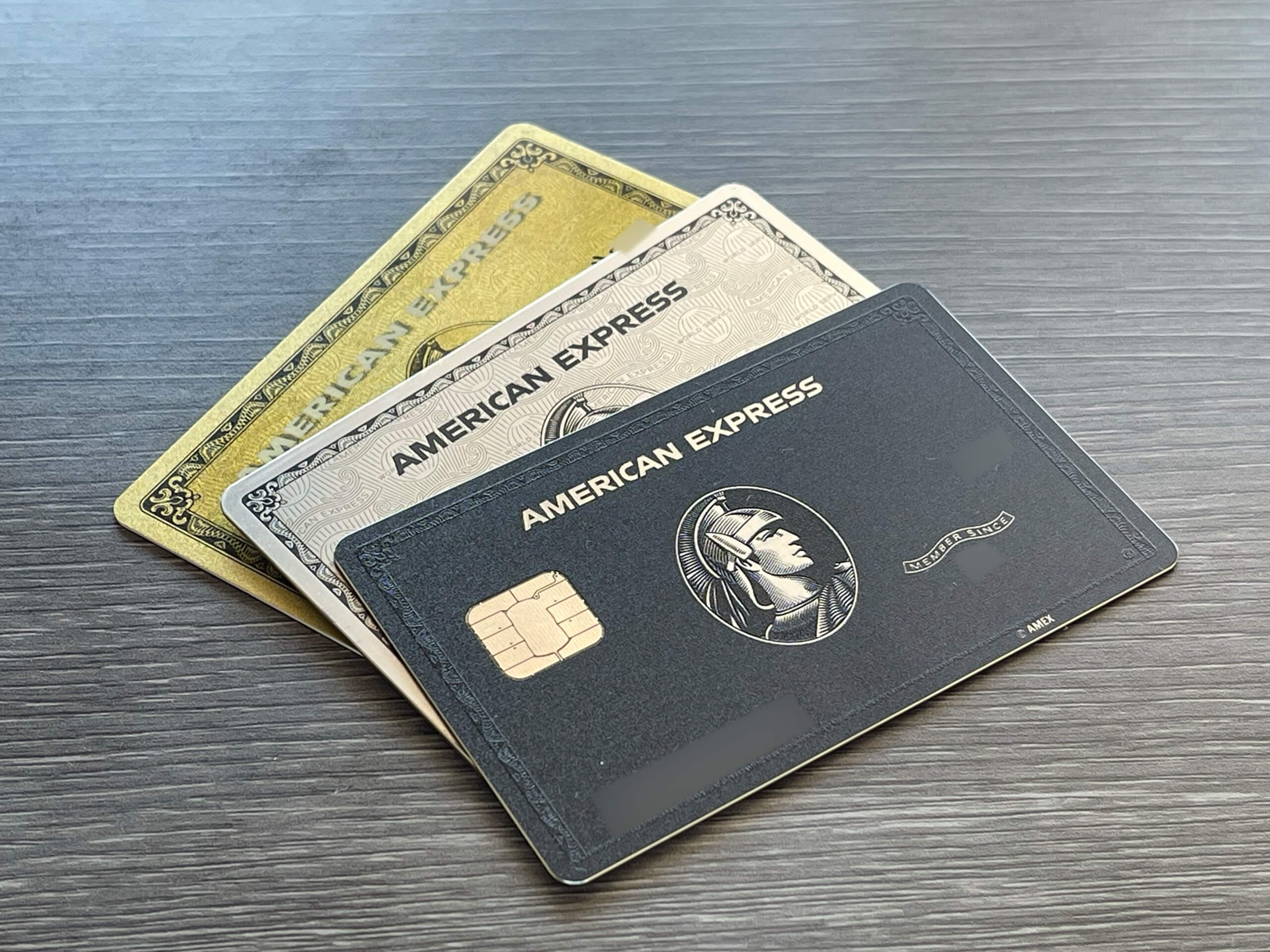
Once I was at a restaurant in Cologne, a business dinner with a client, and naturally I intended to pick up the check. The bill came, I put down the Centurion. The waiter came back: "I'm sorry, we only take Visa and Mastercard." No problem, I had the backup card with me. But the moment was uncomfortable. You put down a titanium card that costs 5,000 euros a year, and it gets declined. Not because of insufficient funds, but because the restaurant doesn't want to pay the fees.
Another time I was at a highway rest stop, fueling up, and realized I'd left the backup card at home. The rest stop didn't accept Amex. Apple Pay with Amex didn't work either. I had to ask my travel companion to pay for the fuel. That happens to you exactly once, and then you never forget the backup card again.
And then there are the small moments: the farmers' market where the cheese stand only takes cash. The flower shop that only accepts debit cards. The dry cleaner that expects cash. In these moments, it becomes clear that Germany, despite all its progress in card payments, is still far from a cashless society. And Amex is one step further behind within an already limited card ecosystem.
The Trend
The good news: it's getting better. Slowly, but measurably.
Five years ago, my estimated acceptance rate in major cities was maybe 45 to 50 percent. Today it's 60 to 70 percent. That's a noticeable difference. New payment terminals from providers like SumUp or iZettle support Amex by default, and many younger business owners accept it simply because it's included in their terminal package.
The integration of Amex into standard payment solutions is also contributing. When a hair salon gets a SumUp terminal, it can automatically accept Amex too. Whether the owner knows and communicates this is another question. But technically, it works.
The biggest driver of change, in my observation, isn't the large chains (they made their decision long ago) but the medium and small businesses switching to modern payment solutions. A cafe that moves from a traditional debit card setup to a modern terminal suddenly accepts Amex too, sometimes without even knowing it.
Whether Germany will ever reach the Amex acceptance levels of the UK or the US, I doubt it. The structure of the German payment market, the dominance of debit cards, the affinity for cash, the skepticism toward credit cards, all of that slows things down. But the direction is right.
Practical Tips
To wrap up, a few things that help me in everyday life.
First: check acceptance before dining out. The Amex app has an acceptance locator that's reasonably up to date. Not perfect, but a good starting point.
Second: don't ask "Do you take American Express?" Just hold the card to the terminal. If the contactless payment goes through, great. If not, you switch. It saves the discussion and the occasionally irritated look from the cashier.
Third: when ordering from smaller online shops, check the payment options before filling your cart. Few things are more annoying than going through an entire checkout process only to discover at the end that Amex isn't accepted.
Fourth: always keep your backup card in the same place. Mine is in the same card slot as the Amex. Leaving it at home is not an option.
Fifth: if you frequently pay with Amex for business and have a regular restaurant or supplier that doesn't accept Amex, bring it up. Sometimes it's simply a matter of awareness. The merchant has a terminal that could support Amex but has never enabled the feature. A brief conversation can change that. Not always, but sometimes.
The Big Picture
Amex acceptance in Germany is neither catastrophic nor adequate. It's a compromise you can live with if you prepare for it. Anyone who wants to use Amex as their only card in Germany will regularly run into problems. Anyone who uses it as their primary card with a solid backup system will get by just fine.
For me personally, the advantages of Amex, points, insurance, concierge, status, far outweigh the drawbacks of limited acceptance. But I actively plan my daily life around the acceptance gaps. That's not an ideal situation. It's the reality for every Amex user in Germany. And it will probably take a few more years before that fundamentally changes.