Amex Global Transfer 2026: From a German to a US Account
 Christian··5 min read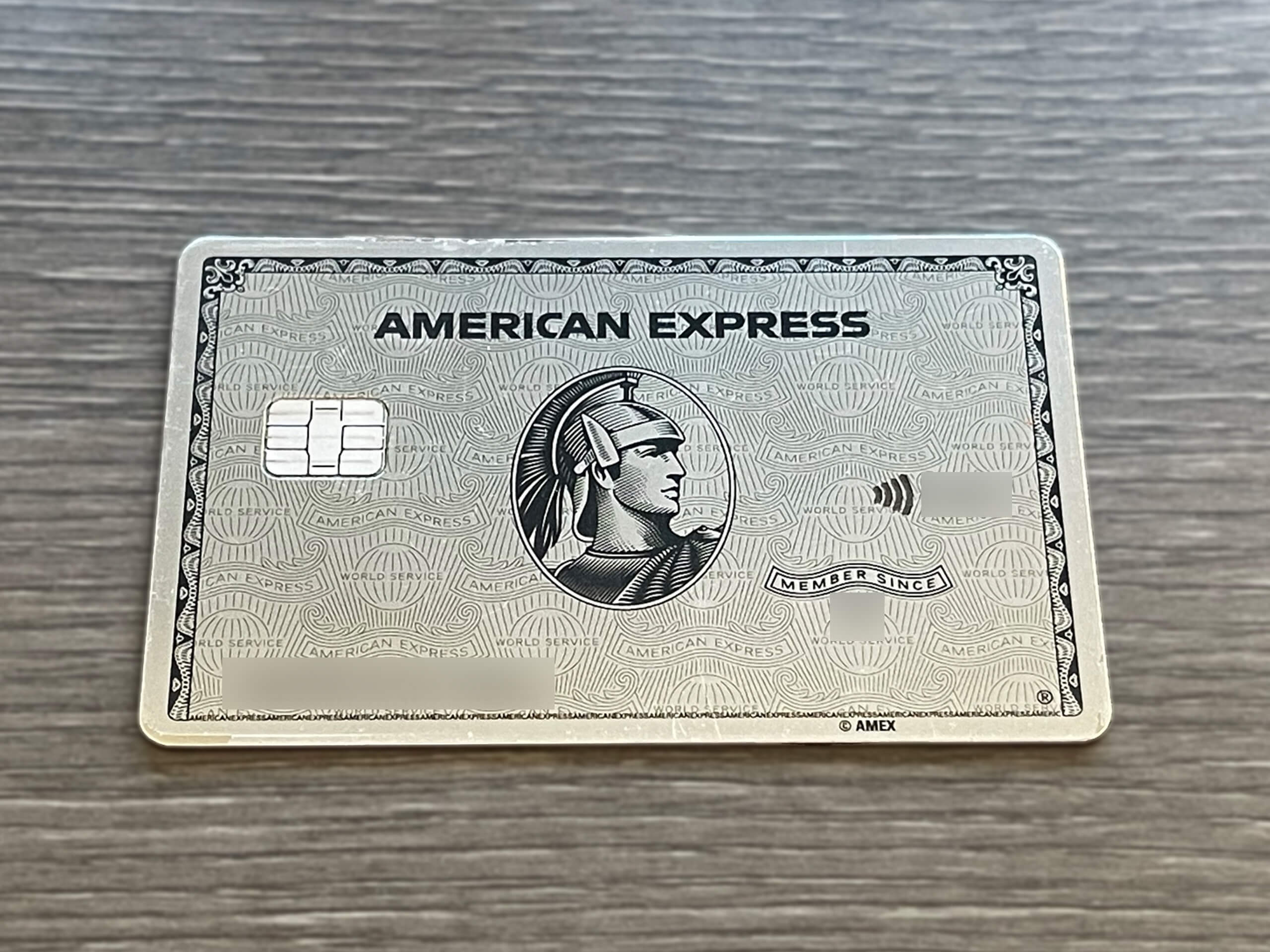
If you're a German trying to apply for a US credit card, you'll run into a chicken-and-egg problem: you need a credit score to get a card, and you need a card to build a credit score. American Express solved this problem with a program that surprisingly few people know about: Global Transfer.
I went through the process myself and learned quite a few things along the way that you won't find in the usual forum posts and blog articles. Here's my complete experience, including the parts where things didn't go as smoothly as I'd hoped.
What Amex Global Transfer Actually Is
Global Transfer is an internal American Express program that allows existing Amex customers in one country to apply for an Amex card in another country. The key point: Amex takes your existing customer relationship into account. Instead of relying solely on the local credit score of the target country, Amex draws on your history as a cardholder in your home country.
For German Amex holders, this means: if you've had a German Amex Platinum, Gold, or even a more basic card for years, that relationship can serve as a reference when you want to apply for a US Amex. You're not completely bypassing the US credit system, but you're getting a foot in the door that you wouldn't have without Global Transfer.
The program isn't new. It has existed for many years and isn't actively promoted by Amex. It doesn't appear prominently on the website anywhere. You have to know it exists, and you have to actively ask for it. Amex treats it like an internal tool, not a product they want to sell.
Why This Matters for German Entrepreneurs
The US credit system works fundamentally differently from the German one. In the US, banks compete to give you credit. The credit card landscape is orders of magnitude more diverse, the rewards programs more generous, the limits higher. Anyone who gets into building US credit quickly notices that the American system offers significant advantages for certain entrepreneur profiles.
But getting in is the hurdle. No credit score, no card. No card, no credit score. Global Transfer offers a way to break this cycle. Instead of spending months or even a year with a secured card just to build up a score in the first place, you can theoretically jump straight to a regular or even a premium card.
Theoretically. In practice, it's a bit more complicated.
The Requirements
Before you can even consider Global Transfer, you need to meet several requirements. Not all of them are obvious, and Amex doesn't communicate them transparently.
An existing Amex in Germany. This is the basic requirement. You need an active American Express card in Germany. The longer you've had it, the better. Amex doesn't state an official minimum, but based on reports and my own experience, I'd say at least 12 months, preferably 24 months or more. A card you applied for three months ago probably won't be enough.
Solid spending on the German card. Amex looks at how you use your German card. If you've had it for two years but only put 200 euros a month through it, that's a weaker signal than 3,000 euros in monthly spending. The exact thresholds aren't public, but the logic is clear: the more volume and the more reliable your payment behavior, the better your chances.
A US address. You need an address in the United States where Amex can send the card and that serves as your billing address. It doesn't have to be your own residence. Many people use the address of their US LLC, a registered agent, or a friend. Amex doesn't check whether you live there, but the address must be real and deliverable. A PO box alone usually isn't enough.
ITIN or SSN. Ideally, you already have an Individual Taxpayer Identification Number (ITIN) or a Social Security Number (SSN). You can get an ITIN through a structured process that typically takes four to eight weeks. Without an ITIN or SSN, it gets difficult because Amex needs a tax identification number for the US card. Some people report that Global Transfer has worked without an ITIN in isolated cases, but that's the exception, not the rule. I wouldn't count on it.
Clean credit history in Germany. No outstanding collection proceedings, no payment defaults. This should go without saying, but I mention it for completeness. Amex reviews your German customer history, and if there are red flags, Global Transfer won't work.
The Process in Detail
The process is less digital than you'd expect from a financial product in 2026. There's no online form you fill out and hit "submit." Instead, much of it runs through direct contact.
Step 1: Contact Amex US. You call the International Card Services department at Amex US. You can find the number on the American Amex website. Alternatively, you can go through the customer service of your German Amex and ask to be transferred, but the direct route is usually faster.
Step 2: Request Global Transfer. You explain to the representative that you're an existing Amex customer in Germany and would like to apply for a US card through Global Transfer. In most cases, the representatives know what you're talking about. If not, ask to be transferred to someone who handles International Card Applications.
Step 3: Provide your details. You give your German card number so Amex can verify your existing customer relationship. You'll also need your US address, your ITIN or SSN, and the specific US card you want to apply for.
Step 4: Wait. The application gets reviewed internally. This can happen within minutes, but it can also take a few days. In my case, the decision came after two business days by email. Some people report instant decisions over the phone, others a wait time of up to two weeks.
Step 5: Receive the card. If the application is approved, you'll get the card shipped to your US address. Depending on the card and shipping method, this takes a few days to two weeks.
The entire process from call to card in hand took about three weeks for me. It goes faster if you get approved immediately on the phone and Amex uses express shipping.
Which Cards Are Available
Not every US Amex card is available through Global Transfer, but the selection is broader than many think.
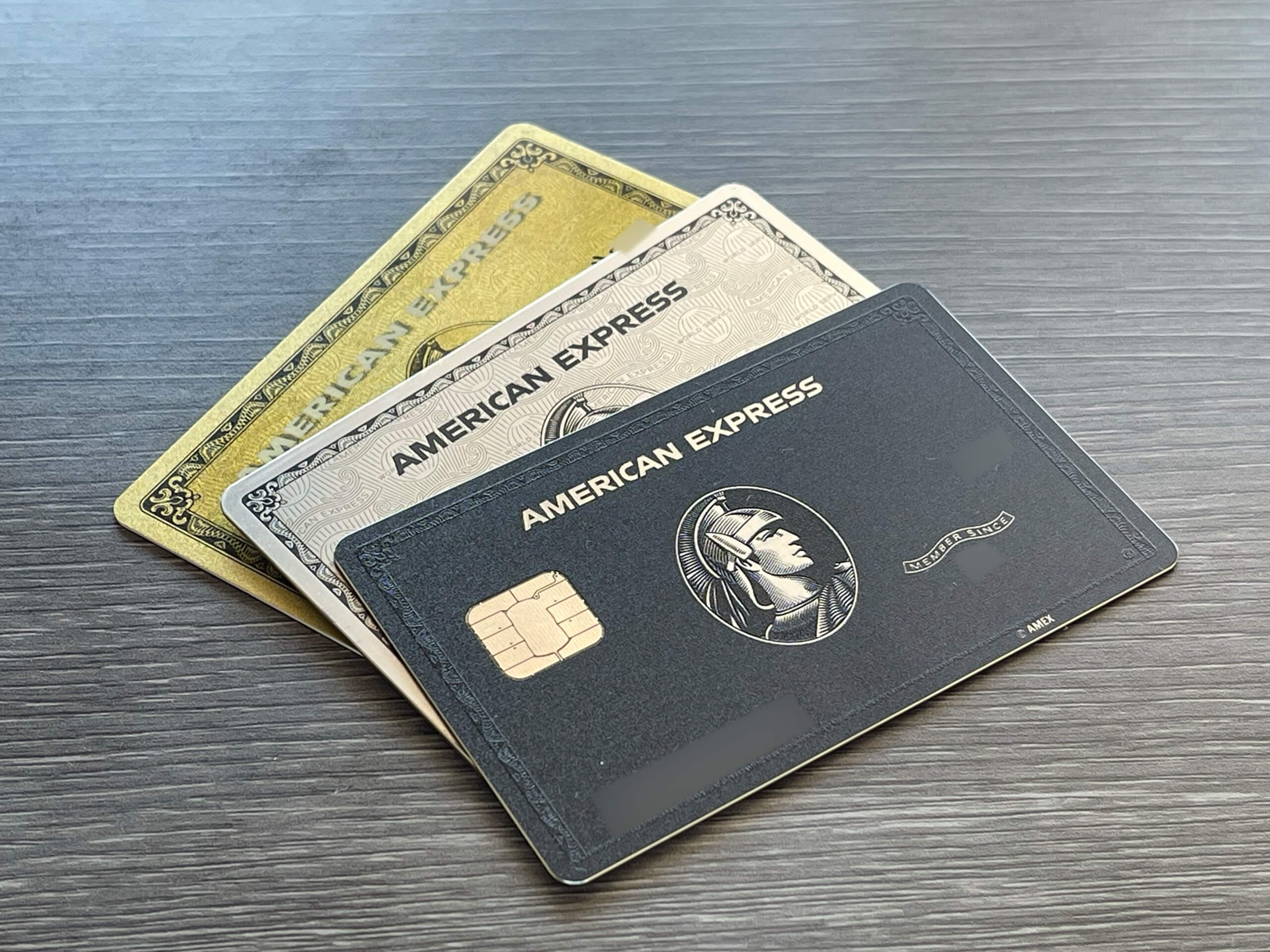
Platinum Card. The US Platinum is available through Global Transfer and is one of the most commonly requested cards through this route. It differs significantly from the German Platinum: different benefits, different annual fee, different structure.
Gold Card. Also available. The US Gold, with 4x points on restaurants and groceries, has a distinctly different profile from the German Gold.
Green Card. Possible, but less commonly requested through Global Transfer because most people who go through the effort aim for a premium card right away.
Business Cards. This is where it gets more interesting. Amex Business Platinum, Business Gold, and several other business cards are generally accessible through Global Transfer. The requirement is that you can demonstrate a US business, typically an LLC or corporation.
Not available are typically co-branded cards like the Hilton Amex or the Delta Amex. These run through partner banks and don't fall under the Global Transfer program. The Centurion is also not available through Global Transfer.
The Odds of Success
I have to be honest here: Global Transfer is not a guarantee. Some applications get approved, some get denied. Amex doesn't publish statistics, and the decision criteria aren't fully transparent.
What I know from my own experience and from talking with others: your chances increase with the duration and quality of your German Amex relationship. Someone with a German Platinum for five years and 50,000 euros in annual spending has better odds than someone with a Gold for one year and 5,000 euros in volume.
There are reports of denials for customers who had only recently become Amex cardholders. There are reports of approvals for customers who only had a basic card but for over three years. A clear pattern is hard to identify, except that longevity and spending seem to be the most important factors.
If you get denied, it's not the end of the world. You can try again after a few months, ideally after further strengthening your German Amex relationship. Or you take the alternative route I describe below.
The Catch: No Welcome Bonus
And here's the point that many overlook or underestimate. With a card applied for through Global Transfer, the sign-up bonus is waived in most cases.
That's the catch. The welcome bonus is one of the biggest value drivers of US Amex cards. The US Platinum currently offers a bonus of 80,000 to 150,000 Membership Rewards points, depending on the current offer. At a conservative value of 1.5 cents per point, that's $1,200 to $2,250 in value. This bonus typically goes away with Global Transfer.
What this means: you get the card, you can use it, you earn points through regular spending. But the big initial bonus that more than offsets the annual fee in the first year? You don't get it.
For some, that's acceptable. They want access to the US Amex ecosystem and are willing to forgo the bonus. For others, and I count myself among them, that's a significant financial disadvantage that influences the strategy.
The Alternative: The Slower but Financially Better Path
There's another way into the US Amex system that takes longer but pays off more. Here's how it works:
First, apply for a secured credit card, for example from Capital One or Discover. You don't need a credit score for this, just an ITIN and a US address. The secured card requires a deposit (typically $200 to $500) that serves as your credit limit.
Then wait six to ten months and use the secured card regularly, always paying on time. During this period, your US credit score builds up, typically to 680 to 720 points.
Then apply for a regular US Amex. Not through Global Transfer, but through the normal application process. With a credit score of 700+, you have good chances of approval. And the crucial difference: you get the full welcome bonus.
The math is simple. Global Transfer saves you six to ten months of waiting time but costs you the bonus of 80,000 to 150,000 points. The slow path takes roughly a year longer but potentially brings you $1,200 to $2,250 in bonus value. For most people who don't urgently need a US Amex right away, the slow path is the financially smarter choice.
The Transfer Rate Change: A Cautionary Tale
In August 2024, Amex worsened the transfer ratio for Emirates Skywards from 1:1 to 4:3. What used to be a straightforward swap now requires 33 percent more points for the same mileage value.
I mention this because it illustrates a fundamental risk that's also relevant to Global Transfer. Amex can change the terms of its programs at any time. That applies to transfer rates, welcome bonuses, and Global Transfer itself. What works today may not work tomorrow.
The Emirates change came with little advance notice and surprised many cardholders who had been stockpiling points for Emirates redemptions. The lesson: programs like Global Transfer are options, not entitlements. Amex can change the rules, limit availability, or shut the program down entirely.
That's why I recommend: if you want to use Global Transfer, do it soon. Don't wait another two years because "the terms won't change." They can change. They have changed with other programs.
My Personal Experience
I used Global Transfer myself, and the process was simultaneously easier and more frustrating than I expected.
Easier, because the actual application was straightforward. I called Amex US, provided my German card number, gave them my US address and ITIN, and the representative took my application. The call took about 25 minutes, including verification and time on hold.
More frustrating, because the decision didn't come immediately. I was told the application would be reviewed and I'd be notified by email. Two days of silence. On the third day, an email: approved. The US Platinum was on its way.
What bothered me: the communication was minimal. No confirmation email after the call, no tracking, no status updates in between. You call, provide your details, and then you wait. For a company that sells premium cards with four-figure annual fees, I would have expected more transparent communication.
The card itself arrived at my US address after about ten days. Online activation, no issues. My initial credit limit was moderate, lower than what I was used to from my German card. After six months of regular use, it was automatically increased.
What I didn't get: the welcome bonus. That was expected and priced in, but it still felt like a missed opportunity. 80,000 points that other new customers receive, denied to me as a long-standing Amex customer because I chose the "wrong" path. That's the price of the shortcut.
What I Would Do Differently in Hindsight
If I were starting the process from scratch, I would take the slow path. First apply for the ITIN, then get a secured card, build a credit score for six months, and then apply for the US Platinum through the regular process. With the full bonus.
The reason is simple: the bonus of 80,000 to 150,000 points outweighs the time advantage of six to ten months. I was in a rush at the time because I needed the US card for business expenses. Looking back, the secured card would have served that function during the transition period as well.
That doesn't mean Global Transfer is bad. For someone who urgently needs a US Amex right away and is willing to forgo the bonus, it's a legitimate path. But for most people who can be patient for a few months, the alternative is better.
Practical Tips for the Application
If you decide to go with Global Transfer, here are some things that make the process smoother.
Call during US business hours. The representatives in the International Card Services department tend to be better trained and have more experience with Global Transfer requests. That means Eastern Time, so typically between 3 PM and 11 PM German time.
Have all your details ready. German card number, US address (complete with ZIP code), ITIN or SSN, and the exact name of the card you want to apply for. Nothing is more frustrating than having to search for documents in the middle of the application.
Be polite but firm. Some representatives don't know about Global Transfer or are unsure. If someone can't help, ask for a supervisor or to be transferred to the right department. Stay friendly, but don't accept "that's not possible" before you've spoken to someone who actually knows.
Document everything. Write down the date, time, representative's name, and a reference number if you're given one. If problems come up later, you have a basis for follow-up.
Don't expect miracles with your credit limit. Your first US credit limit will probably be lower than your German card's. That's normal. Amex is cautious with new US accounts, regardless of whether they were opened through Global Transfer or the regular route. After a few months of on-time payments and regular spending, the limit typically gets adjusted.
The Decision
Global Transfer is a tool with a clear use case: you need a US Amex quickly and are willing to forgo the welcome bonus for it.
For entrepreneurs who already have a US LLC and need a premium card for business expenses right away, that can make sense. For individuals who want to tap into the US points system and aren't in a hurry, there's the financially better path through a secured card and organically building a credit score.
Both paths lead to the same destination. One is faster, the other more rewarding. Which one you choose depends on your situation. I took the fast path and would recommend the slow one today. But that's not a criticism of the program. It's an insight you only gain once you've seen both sides.
What I can say with certainty: the US Amex ecosystem is worth the effort, no matter which path you take. The Membership Rewards transfer partners in the US, the bonus structures, the credit limits, all of it operates on a different level than what we know in Germany. Global Transfer is a shortcut to get there. Whether you take it or go the long way around is ultimately a question of priorities.