Best Credit Card Combinations 2026: 4 Setups
 Christian··5 min read
The idea that a single credit card covers every situation is an illusion in Germany. If you use Amex, you'll regularly hit acceptance limits. If you only have Visa, you're giving up one of the strongest points programs in the world. And if you own multiple cards without a system, you lose track and pay fees for features that cannibalize each other.
The solution is a well-thought-out combination. Two to three cards that complement rather than overlap. I've tested various setups over the past years and keep seeing the same four combinations that work among people around me. Each for a different profile, each with a clear logic.
The Core Problem
American Express has the best points program on the German market. Membership Rewards with transfer partners like British Airways, Singapore Airlines, ANA, and Hilton offers a per-point value that beats any cashback program. On top of that come travel benefits that no Visa or Mastercard issuer in Germany offers in this form: lounge access, hotel status, Fine Hotels & Resorts, Concierge.
The problem: Amex isn't accepted everywhere. In major German cities, acceptance is 70 to 80 percent of merchants that offer card payments. In rural areas, it drops to 40 to 50 percent. Aldi, Lidl, dm, many bakeries, and local shops don't take Amex. Online acceptance is better, but gaps remain.
On the other side stand Visa and Mastercard. Near-universal acceptance, but weak rewards programs in Germany. Most free Visa cards offer no points program, no cashback, or at best 0.5 percent. Insurance coverage on free cards is minimal or nonexistent.
The logical consequence: Amex for points and perks, Visa or Mastercard as backup for everything else. That's the basic formula. The following four combinations build on it.
Combination 1: Amex Platinum + DKB Visa Debit
The classic solution. The setup I recommend to most people who are willing to invest in a premium card.
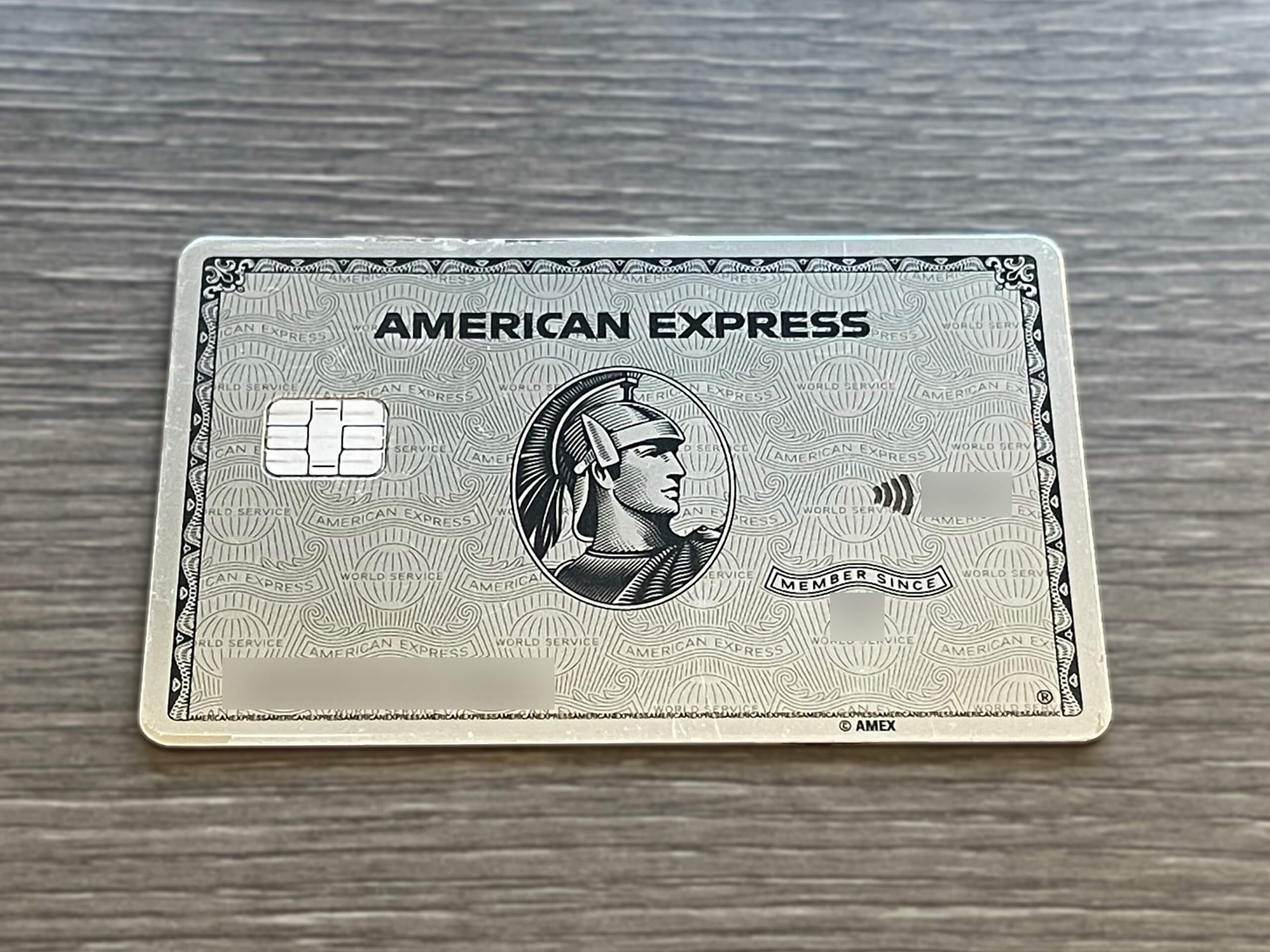
The Amex Platinum (720 euros/year) is the primary card. It earns Membership Rewards points, brings Priority Pass lounge access, Hilton Gold and Marriott Gold status, 200 euros in travel credit through Amex Travel, Fine Hotels & Resorts, SIXT ride credit, and a comprehensive insurance package. Everything where Amex is accepted goes through this card.
The DKB Visa debit card (free) is the backup. No annual fee as part of the DKB checking account (active customer status from 700 euros monthly deposit). No foreign transaction fee. Free cash withdrawals worldwide. Universal Visa acceptance. The DKB Visa is the most pragmatic payment method in Germany: it works always and everywhere, costs nothing, and has no hidden fees.
Why this combination works. The Platinum covers everything where you can generate value: points, insurance, status. The DKB fills the gaps where Amex doesn't work and delivers what Amex can't: free cash worldwide.
Effective cost. 720 euros minus 200 euros travel credit minus 200 euros SIXT ride minus 150 euros restaurant credit minus 100 euros Lodenfrey shopping (when fully used) = effectively 70 euros. Note from 1 October 2026: each of the two 50-euro vouchers is only paid out on a 200-euro minimum spend — 400 euros of your own spend for 100 euros of credit, effectively a 25 percent discount. The Business Platinum Card is exempt. That calculation only holds if you book through Amex Travel, use SIXT ride and shop at Lodenfrey anyway. Restricted credits are not cash, they are a shopping list — see the counter-calculation on the Platinum. If only the travel credit is realistically claimed, the effective cost is closer to 520 than 70 euros. For that, you get Priority Pass, hotel status, FHR, insurance, and a strong points program. Everything else is free.
Limitation. The DKB Visa is a debit card. With rental car bookings or hotel deposits that require a real credit card, you may run into problems. Anyone who frequently rents cars or checks into hotels that don't accept Amex should consider a third card.
Who it's for. Employees or freelancers who travel regularly (six or more flights per year), who actively use the Platinum benefits, and who want a straightforward two-card setup.
Combination 2: Amex Gold + Barclays Visa
The more affordable option for anyone who wants to enter the Amex ecosystem without investing 720 euros.
The Amex Gold (240 euros/year) earns Membership Rewards points at the same earning rate as the Platinum: 1 point per euro. The Gold has no lounge access, no hotel status, and no travel credit. But it has what matters most in the long run: access to the Membership Rewards program with all transfer partners. Every euro spent generates points you can transfer to airlines and redeem for premium flights.
The Barclays Visa (free) is more than just a backup. It comes with its own insurance package: trip cancellation insurance, international health insurance, rental car insurance. For a free card, that's remarkable. Add to that worldwide use without foreign transaction fees and a real credit line, which sets it apart from debit cards like the DKB.
Why this combination works. The Gold collects points. The Barclays delivers insurance coverage and acceptance where Amex doesn't work. Together, they cost 240 euros per year and cover points, insurance, and universal acceptance. The price-to-value ratio is hard to beat.
Effective cost. 240 euros. No hidden fees, no credits you have to actively redeem, no pressure. With 15,000 euros in annual spending on the Gold, you collect 15,000 MR points, which can be worth 150 to 300 euros with an airline transfer. The card has already paid for itself.
Limitation. No lounge access. No hotel status. No travel credit. No FHR. Anyone who wants these benefits needs to step up to the Platinum. And anyone who flies frequently and knows the waiting time at the gate will eventually feel the lack of lounge access as a real constraint.
Who it's for. Beginners in the Amex ecosystem. People who travel three to five times a year. Anyone who wants to earn points without paying high fees. Students and young professionals with moderate income.
Combination 3: Amex Platinum + Amex Business Platinum + DKB Visa
The power setup for entrepreneurs. Three cards, maximum value, clear structure.
The Amex Platinum (720 euros/year) for all personal spending. Restaurants, personal travel, shopping, subscriptions. Everything that isn't business goes through this card.
The Amex Business Platinum (850 euros/year) for all business spending. Software, advertising, business travel, client entertainment, office supplies. Separate billing that goes straight to the tax advisor. Up to 99 supplementary cards for employees. Integration with accounting software.
The DKB Visa debit card (free) as the universal backup for both areas. Where Amex doesn't work, whether personal or business, the DKB steps in.
Why this combination works. You maximize points across both sides of your life. Every euro, personal or business, flows into the Membership Rewards program. Points from both Amex cards can be pooled into one account, which accelerates earning. On top of that, you get double travel credit (400 euros at Amex Travel), double Priority Pass (as backup), double insurance coverage, and clean separation for accounting.
Effective cost. 1,570 euros total fees minus 400 euros travel credit = 1,170 euros. The Business Platinum is deductible as a business expense, which at a 42 percent tax rate saves another 357 euros. Effective cost: 813 euros for two premium cards and a free backup card.
Limitation. High total cost, even if it puts itself in perspective. And administrative overhead: two Amex statements, one DKB statement. Three cards in the wallet, three apps. Anyone who prefers simplicity won't be comfortable with this.
Who it's for. Self-employed individuals and entrepreneurs with monthly business spending of at least 2,000 euros who travel regularly and actively use the points system. This setup makes no sense if your business spending is below 1,000 euros per month or you never fly.
Combination 4: Amex Platinum + Miles & More Gold
For Lufthansa frequent flyers who want to optimize their credit card setup for maximum miles and maximum status within the Star Alliance.
The Amex Platinum (720 euros/year) brings Priority Pass lounge access, hotel status, travel credit, and Membership Rewards points. MR points can be transferred 1:1 to Miles & More, making this card an effective miles earner even when you're not flying Lufthansa directly.
The Miles & More Gold credit card (Mastercard, approx. 110 euros/year) earns Miles & More miles directly: 1 mile per 2 euros spent domestically, 1 mile per euro spent internationally. The earning rate is lower than with Amex, but the miles land directly in your Miles & More account without any transfer. Plus, there's a decisive advantage: Senator Lounge invitations. Depending on your status and spending on the card, you receive invitations to the Lufthansa Senator Lounge, which is significantly better than most Priority Pass lounges in Germany.
Why this combination works. You earn miles from two sides. MR points from the Platinum, which you transfer to Miles & More. Plus direct miles from the M&M Gold on all payments where Mastercard is accepted and Amex isn't. On top of that, you have lounge access via Priority Pass (worldwide) and potentially Senator Lounge (at Lufthansa hubs). Hotel status via the Platinum and everyday miles earning via the M&M Gold.
Effective cost. 830 euros (720 plus 110). Minus 200 euros travel credit = 630 euros. For that amount, you get a comprehensive lounge network, hotel status, insurance, and a dual miles-earning system.
Limitation. You tie yourself heavily to Miles & More and therefore to the Star Alliance. Anyone who wants to stay flexible and also redeem with Emirates, Qatar, or Cathay Pacific is better off with the pure MR system, which offers more transfer partners. Also, the M&M Gold is a Mastercard, not Visa. In Germany that's not a problem (Mastercard acceptance is high), but in some countries merchants prefer Visa.
Who it's for. Frequent flyers who primarily fly Lufthansa and Star Alliance, who aspire to or hold Senator status, and who want to maximize miles earning across multiple channels.
What I Personally Use
My setup consists of the Centurion Card, the Business Platinum, and the DKB Visa. Plus a Barclays Visa as a safety net, which I rarely need.
The principle matches Combination 3, with the difference that the Centurion replaces the Platinum. The logic is identical: primary card for personal (Centurion), separate card for business (Business Platinum), backup for acceptance gaps (DKB).
Why not the Miles & More card as well? Because I prefer the flexibility of Membership Rewards. I can transfer MR points to a dozen airlines. Miles & More miles are tied to the Star Alliance. Since I fly British Airways, Singapore Airlines, or ANA depending on the route, I don't want to give up that flexibility.
I use the DKB Visa more often than I'd like. An estimated 25 to 30 percent of my payments in Germany go through the DKB because Amex isn't accepted. Those are lost points. But the alternative, only frequenting Amex-friendly merchants, is unrealistic.
What to Watch for When Combining
A few ground rules that apply regardless of which combination you choose.
Check insurance overlaps. If you have two cards with travel insurance, you may be paying double for the same coverage. Insurance always applies only to the card you used to pay for the trip. Two insurance packages don't mean double protection; they mean a choice. Make sure you know which card provides which coverage and book accordingly.
Points systems that complement each other. Amex Membership Rewards plus Miles & More makes sense because you can transfer MR points to M&M, connecting both systems. Amex plus Payback makes less sense because the systems can't be linked and you end up managing two separate pools with different per-point values.
Calculate annual fees as a total package. Don't evaluate each card individually; look at the full package. What do all cards cost together? What do you get for it? Are there overlaps you're paying for twice? If so, one card can go.
Simplify the decision at the register. A good card setup needs clear rules. Business: business card. Personal, Amex accepted: Amex. Personal, Amex not accepted: Visa. If you have to think about which card to pull out with every payment, your system is too complicated.
The Trap: Too Many Cards
I see it regularly around me. People who get excited about credit card optimization and start collecting cards. Five, six, seven cards. Each with a supposed niche, each with a theoretical advantage.
The problem: beyond four cards, things get unwieldy. You forget which card has which insurance. You miss redeeming credits in time. You pay annual fees for cards you haven't used in months. And the administration, checking statements, tracking points, knowing insurance terms, eats more time than the benefits are worth.
Three cards are usually enough. One Amex as the primary card, one Visa or Mastercard as backup, optionally a third for a specific purpose (business separation, miles earning with a particular airline, cash withdrawals). More than four becomes counterproductive for most people.
I have four cards and consider that the upper limit. The fourth (Barclays) gets used so rarely that I occasionally think about canceling it. I keep it because it's free and works as a safety net. If it had a fee, it would have been gone long ago.
Finding the Right Combination
In the end, the choice depends on three factors.
Your travel behavior. If you fly frequently, you need lounge access and hotel status. That argues for the Platinum. If you fly rarely, the Gold is sufficient. If you fly primarily Lufthansa, the M&M supplement is worthwhile.
Your spending profile. High business expenses argue for the Business Platinum. Moderate personal spending argues for the Gold. A mix of both argues for Combination 3.
Your willingness to optimize. Anyone willing to pick the right card at every payment, actively transfer points, and maximize credits gets enormous value from a three-card setup. Anyone who just wants to pull out one card and not think about it is well served with the Amex Platinum plus DKB and should leave it at that.
There's no objectively best card portfolio. But for every profile, there's a combination that works significantly better than a single card. And the effort of finding and setting up the right combination is a one-time investment. After that, it runs on its own.