The Best Credit Cards for Media Buyers 2026
 Christian··5 min read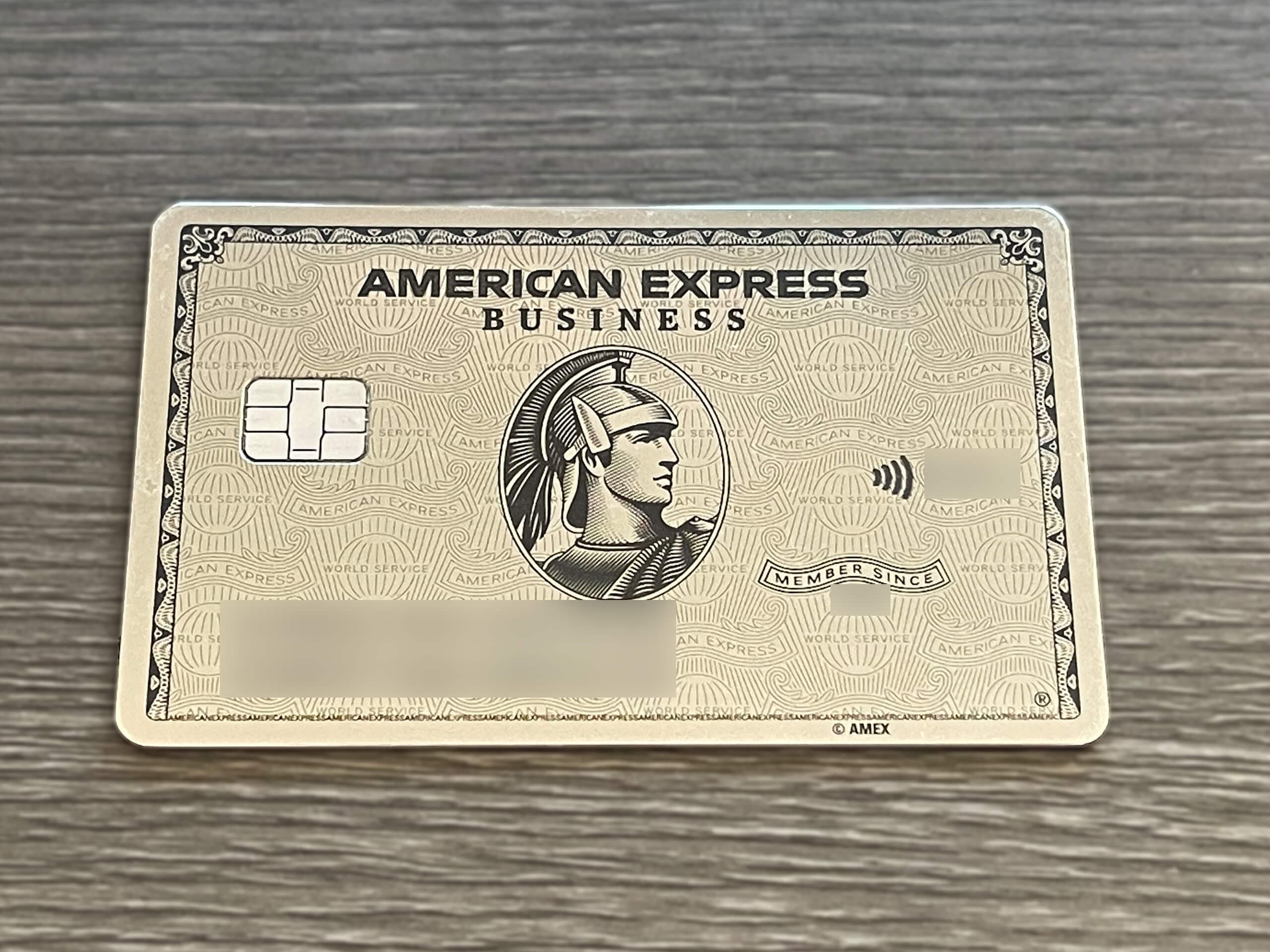
Media buyers spend money. A lot of money. 10,000, 50,000, sometimes 200,000 euros per month flow into Facebook Ads, Google Ads, TikTok, Snapchat, and other platforms. That's the job. And most media buyers pay these amounts through credit cards that give them exactly nothing back. No points, no cashback, no added value. Just a debit card or a standard credit card that the money flows through.
That's an expensive mistake. At 50,000 euros in monthly ad spend with the right card, you collect 600,000 Membership Rewards points per year. Transferred to airline partners, that's five business class flights to Asia. For 175 euros in annual fees. Anyone who ignores this is leaving money on the table.
I know this topic from personal experience. I spend significant amounts on advertising myself and have tested various card setups over the years. Here's what works, what doesn't, and how to optimize your setup.
The Problem: High Volume, Little Optimization
Most media buyers in Germany use their business credit card purely as a payment instrument. The card exists because Facebook and Google need a payment method. Which card it is, many don't care.
That's understandable. When you spend all day working on ROAS, CPM, and conversion rates, you don't necessarily feel like also dealing with credit card optimization. But the irony is: media buyers are people who professionally spend money to make money. The return on ad spend is optimized to the second decimal place. But the return on the payment method used to pay for the ad spend is completely ignored.
At 50,000 euros in monthly spend on the right card, you collect around 620,000 Membership Rewards points per year. That's five business class flights to Asia or a dozen within Europe. That's not theoretical. Those are concrete bookings you can make with the points you've earned.
Amex Business Gold: The Card for Recurring Ad Spend
The Amex Business Gold is the best starting card in Germany for most media buyers. You earn 1 Membership Rewards point per euro spent. With the optional points turbo (15 euros per year), it's 1.5 points per euro on the first 40,000 euros in annual spend.
That doesn't sound spectacular at first glance. But it becomes significant when you run the numbers at the volumes media buyers work with.
10,000 euros in monthly ad spend: 120,000 euros in annual spend. 40,000 x 1.5 (turbo) = 60,000 points + 80,000 x 1 = 80,000 points. Total: 140,000 MR points. Value with airline transfer: 1,400 to 2,800 euros. Annual fee: 175 euros (plus 15 euros turbo).
30,000 euros in monthly ad spend: 360,000 euros in annual spend. 40,000 x 1.5 = 60,000 + 320,000 x 1 = 320,000. Total: 380,000 MR points. Value: 3,800 to 7,600 euros.
50,000 euros in monthly ad spend: 600,000 euros in annual spend. 40,000 x 1.5 = 60,000 + 560,000 x 1 = 560,000. Total: 620,000 MR points. Value: 6,200 to 12,400 euros.
At 50,000 euros in monthly spend, you collect over 600,000 MR points per year. That's five business class flights to Asia via ANA or a dozen within Europe via Avios. For 190 euros in annual fees (175 card + 15 turbo). The return at these volumes is enormous.
Amex Business Platinum: For Large Individual Transactions
The Amex Business Platinum has a different strength profile. The points rate is identical to the Business Gold (1 MR per euro, 1.5 with turbo on the first 40,000 euros). The advantage isn't in the points but in the credits and the status.
For recurring ad spend, that's less attractive than the Business Gold because most advertising expenses don't come in as individual charges over 5,000 euros. Facebook typically charges daily or several times per week, in amounts well under 5,000 euros. Google Ads likewise.
Where the Business Platinum becomes interesting for media buyers:
Large individual charges at ad networks. Some affiliate networks and advertising platforms allow manual top-ups in large amounts. If you load 10,000 euros at once, you get 15,000 MR points instead of 10,000. The 1.5x bonus kicks in here.
Conference tickets and sponsorships. Affiliate Summit, DMEXCO, and other industry events often cost 5,000 euros or more. The 1.5x bonus applies here.
The travel benefits. Priority Pass lounge access, Hilton Gold and Marriott Gold status, 200 euros in travel credit, SIXT Platinum. For media buyers who regularly travel to conferences and clients, the Business Platinum delivers significant lifestyle value that the Business Gold doesn't offer.
The Business Platinum costs 850 euros per year. As the sole card for recurring ad spend, it's inferior to the Business Gold. As a complement to the Business Gold, for travel benefits and large individual transactions, it makes sense.
Chase Ink Business Preferred: The US Option
If you have a US LLC, and many media buyers do, you have access to a card that isn't available on the German market: the Chase Ink Business Preferred.
The Chase Ink Business Preferred offers 3x Ultimate Rewards points on advertising and internet services. Uncapped. No annual limit. At 100,000 dollars in monthly ad spend, that's 3,600,000 Ultimate Rewards points per year.
Chase Ultimate Rewards are similarly flexible to Membership Rewards. Transfer partners include United Airlines, Hyatt, British Airways, Singapore Airlines, and others. The value per point with smart redemption is 1.5 to 2.5 US cents.
Annual fee: 95 dollars.
For media buyers with a US presence, the Chase Ink Business Preferred is one of the best cards in the world. 3x on advertising, no cap, for 95 dollars. That doesn't exist in Germany.
The catch: you need a US LLC or corporation, a US address, a US bank account, and a US credit history. Building that takes time and money. For media buyers with six-figure monthly spend, the effort is worth it. For smaller volumes, not necessarily.
The miles turbo: why ad spend is the best points source there is
The point missing from every credit card comparison: for a media buyer the card isn't a payment method, it's a converter. You turn budget that flows anyway into a second currency. And that converter has three stages, which multiply.
Stage 1: the volume itself. An ordinary consumer earns points on purchases they can barely control. You control your largest cost block yourself, daily. €50,000 of monthly ad spend is 600,000 points a year without changing your behaviour at all. No private spending pattern on earth reaches that order of magnitude.
Stage 2: welcome bonuses in rhythm. This is where the actual turbo starts. The minimum spends that normal applicants work at for months, you clear in days. What is a brake for everyone else is a one-week scheduling problem for you. Plan the card portfolio deliberately and you collect bonuses rather than individual points, and one bonus is typically worth about half a year of ongoing spend.
Stage 3: the US system. And that's the stage where most German media buyers stop doing the maths, even though the biggest lever sits right there.
Why US cards break the calculation
The American credit card market isn't a bit better than the German one. It's a different league, for a simple reason: in the US several large issuers compete for the same customers, and they compete on bonuses.
What that means in practice:
- Welcome bonuses at a multiple of German offers, across several cards and several issuers.
- More transfer partners and better rates. Points spread across far more airline and hotel programmes, which raises the value per point at redemption.
- Categories with real multipliers on online advertising and software, instead of a flat point per euro.
- Considerably higher credit lines relative to creditworthiness, which at six-figure monthly volume is a capacity question, not a comfort one.
For someone pushing €50,000 a month and more through ad platforms, the difference between a German and an American card setup isn't a detail. It's on the order of several long-haul business class flights a year, every year, on money you're spending anyway.
The catch is getting in. Without US credit history you don't get these cards, and without a card you build no history. That chicken-and-egg problem is exactly what Amex Global Transfer solves: Amex counts your existing German customer relationship and lets you enter the US market without starting from zero. What you need and how the process runs is covered there in detail; the tax side and the ITIN application hang directly off it.
A realistic timeline: entry via Global Transfer takes weeks, building a solid US credit history takes months. Starting today buys you nothing for this month; it buys a structure for the coming years. With ad spend running, it's still the highest-yielding hour of work in the calendar.
The Combination: Maximum Points Over the Year
The optimal setup for a high-volume media buyer in Germany is a combination of several cards.
Tier 1: Amex Business Gold as the primary card. The first 150,000 euros in ad spend per year go through the Business Gold. 4x points. That generates 600,000 MR points.
Tier 2: Switch after hitting the cap. Once the Business Gold's 150,000 euro cap is reached, you switch the ad spend to the Business Platinum (1.5x on charges over 5,000 euros) or to another card.
Tier 3: US card for the rest. If you have a US LLC, ad spend beyond the 150,000 euro cap flows through the Chase Ink Business Preferred. 3x points, no cap.
In parallel: Business Platinum for travel benefits. You use the Business Platinum for flight bookings, hotels, conferences, and large individual charges. The travel benefits, lounge access, and hotel status operate independently of ad spend.
This setup maximizes points over the entire year. The first 150K on the Business Gold, then on the Chase Ink or Business Platinum, and travel benefits separately through the Business Platinum.
The Acceptance Problem
Not every advertising platform accepts every card. That's a practical problem that quickly complicates the theory.
Facebook/Meta: Accepts Amex, Visa, Mastercard. No problem.
Google Ads: Accepts Amex, Visa, Mastercard. No problem.
TikTok Ads: Accepts Visa and Mastercard. Amex is not accepted everywhere. You need an alternative here.
Snapchat Ads: Similar to TikTok. Visa and Mastercard are reliable, Amex not always.
Native advertising platforms (Taboola, Outbrain): Generally accept Visa and Mastercard. Amex is also accepted, but with up to 3% surcharge, as with all credit cards on these platforms.
What this means in practice: you can't run your entire ad spend through an Amex. Facebook and Google, yes. TikTok, Snapchat, and some other platforms, not always. For these platforms, you need a Visa or Mastercard alternative, ideally one that earns cashback or points.
Pliant is an option here. Visa-based, up to 1 percent cashback, high limits. Not as attractive as 4x MR points on the Business Gold, but better than nothing. At 20,000 euros in monthly spend on TikTok, 1 percent cashback is still 200 euros per month, 2,400 euros per year.
Cashback vs. Points: The Fundamental Question
At high volume, the question arises: points or cashback? Both have their merits, and the answer depends on your usage patterns.
Cashback advantage: Immediately available, no optimization required, no transfer hassle. 1 percent cashback on 100,000 euros in monthly spend is 1,000 euros. Cash. Every month. No question about how to redeem points, no expiration, no effort.
Points advantage: Higher value when used wisely. 4x MR points on 100,000 euros equals 400,000 points per month (until the cap). Transferred to Singapore Airlines KrisFlyer, those are flights worth 6,000 to 12,000 euros per month. That's a multiple of the cashback value.
The math is clear: if you use the points for premium flights, you beat any cashback rate. A business class flight from Frankfurt to Singapore costs 3,000 to 5,000 euros in cash. In MR points: 92,000 KrisFlyer miles, meaning 92,000 MR points. That corresponds to 92,000 euros in spending on a 1x card or 23,000 euros on the Business Gold at 4x. The effective value per point is 3 to 5 cents. No cashback program comes close.
But: you have to actually use the points. If you don't book business class flights, if you redeem the points for Amazon gift cards, if they sit in the account for years, then cashback is the better choice. Points only have an advantage when you use them wisely.
My recommendation: for media buyers who travel (and most do, conferences, clients, co-working in other countries), points are the better deal. For media buyers who work exclusively remote and don't travel, cashback is the more pragmatic choice.
Taxes: What You Need to Know
Two tax aspects that are relevant for media buyers.
The credit card fee is a business expense. The 175 euros for the Business Gold, the 850 euros for the Business Platinum, all deductible. At a marginal tax rate of 42 percent, you effectively pay around 100 euros for the Business Gold and 493 euros for the Business Platinum.
The points are tax-free. MR points earned from business expenses and used for personal purposes (vacation flights, hotel stays) are considered a discount for tax purposes. No benefit in kind, no income tax. You earn points on your ad spend, transfer them to an airline, and fly business class to Bali. That's unproblematic from a tax perspective.
This is a point many people don't know. The points are tax-free. That means the value you derive from the points is net value. No deductions, no taxation. At an effective value of 10,000 euros per year from MR points, that's 10,000 euros net that you could never achieve as gross income without earning significantly more.
I still recommend discussing the individual situation with an accountant. The general rule is clear, but every case has its specifics.
Limits and Credit Lines
A practical topic that quickly becomes relevant at high ad spend: limits.
Amex charge cards (Business Gold, Business Platinum) have no fixed limit. Instead, there's a flexible spending cap that adjusts based on your payment behavior and creditworthiness. For new cardholders, this cap can initially be low, 5,000 to 10,000 euros. It grows over time and with reliable payments.
At 50,000 euros in monthly ad spend, you need a corresponding credit line. That means: you need to build up your spending, not push 50,000 euros through the card from day one. Start with smaller amounts, pay on time, and increase gradually. Amex adjusts the cap, but it takes time.
A trick many media buyers use: prepayments. You can transfer money to the card account at Amex and thereby increase the available limit. If your limit is 20,000 euros but you want to spend 40,000, you transfer 20,000 euros in advance. The limit rises to 40,000 euros. That's not a secret; it's a documented feature.
Pliant and other fintech cards sometimes offer higher limits from the start, especially for startups with funding. If you need high limits immediately and can't wait for Amex to adjust the cap, a fintech card can serve as a bridge.
My Setup as a Media Buyer
I use the following setup for my advertising spend.
Amex Business Gold for recurring ad spend on Facebook and Google. The 4x points on advertising are the main reason. The first 150,000 euros per year go through this card.
Amex Business Platinum for travel benefits, conference tickets, and large individual transactions. The lounge access, hotel status, and travel credit are essential for me as someone who regularly travels to events and clients. And individual charges over 5,000 euros (sponsorships, large campaign prepayments) get 1.5x points here.
Visa (Pliant) for platforms that don't accept Amex. TikTok, some native advertising platforms, and as backup for anything where Amex doesn't work. 1 percent cashback on what can't go through Amex.
The MR points from the Business Gold and Business Platinum flow into the same pool. I primarily transfer to British Airways Avios (for European business class flights) and Singapore Airlines KrisFlyer (for long-haul). The Pliant cashback goes directly to the business account.
At high ad spend, you collect enough points for multiple business class flights per year without paying a cent. At 600,000 points, that's five long-haul flights or a dozen short-haul. The value quickly reaches five figures. Total card costs: 1,040 euros (175 Business Gold + 850 Business Platinum + 15 turbo).
Redeeming Points Wisely
There's no use in collecting hundreds of thousands of points if you redeem them poorly. Here are the ground rules.
Transfer to airline partners. The value per MR point on airline transfers is 1 to 2.5 cents, depending on the route and cabin class. When redeemed for gift cards or products through the Amex shop, it's 0.3 to 0.5 cents. The difference is five- to eightfold.
Book business or first class. The value per point is highest in premium cabins. An economy flight for 30,000 points that costs 300 euros in cash gives you 1 cent per point. A business class flight for 90,000 points that costs 4,000 euros in cash gives you 4.4 cents per point. The same points, four times the value.
Use sweet spots. British Airways Avios for short-haul: 12,500 Avios for a one-way in business class within Europe. ANA Mileage Club for first class to Japan: 165,000 miles roundtrip (low season). Singapore Airlines KrisFlyer for business class to Asia: 92,000 miles roundtrip. These sweet spots offer the best value.
Don't let the points sit. MR points don't expire at Amex as long as the account is active. But points sitting in an account deliver zero value. Transfer regularly, book regularly, and use the points. A point in the account is worth nothing. A point redeemed for a business class seat is worth 2 to 5 cents.
What I Tell Other Media Buyers
If you spend 5,000 euros or more per month on advertising, you need a card strategy. Not tomorrow. Now.
Step 1: Apply for the Amex Business Gold. 175 euros annual fee, 4x points on advertising spend. That's the foundation.
Step 2: Route as much ad spend as possible through the Business Gold. Facebook, Google, everything that accepts Amex.
Step 3: For platforms without Amex acceptance, use a Visa with cashback (Pliant or similar).
Step 4: If you travel regularly, add the Business Platinum for lounge access and hotel status.
Step 5: If your volume exceeds 150,000 euros per year, explore the US option with a Chase Ink Business Preferred.
Step 6: Redeem the points you've collected wisely. Airline transfers, business class, sweet spots.
This isn't rocket science. It takes a one-time effort to set up, and then it runs on autopilot. Every month, the points flow in, every month, the value grows. At 50,000 euros in monthly spend, that's around 500 to 1,000 euros in value per month. Every month. That's too much to ignore.
My Verdict
The right credit card is not a nice-to-have for media buyers. It's a tool that generates thousands of euros in value at high volume. The Amex Business Gold is the best starting card in Germany: 1 MR per euro, 1.5 with turbo. Supplemented by the Business Platinum for travel benefits and credits, plus a Visa for the acceptance gaps, you have a setup that makes every euro of ad spend work for you.
Anyone spending 10,000 euros or more per month on advertising without a points strategy is giving away the equivalent of multiple business class flights per year. It doesn't have to be that way.