Christian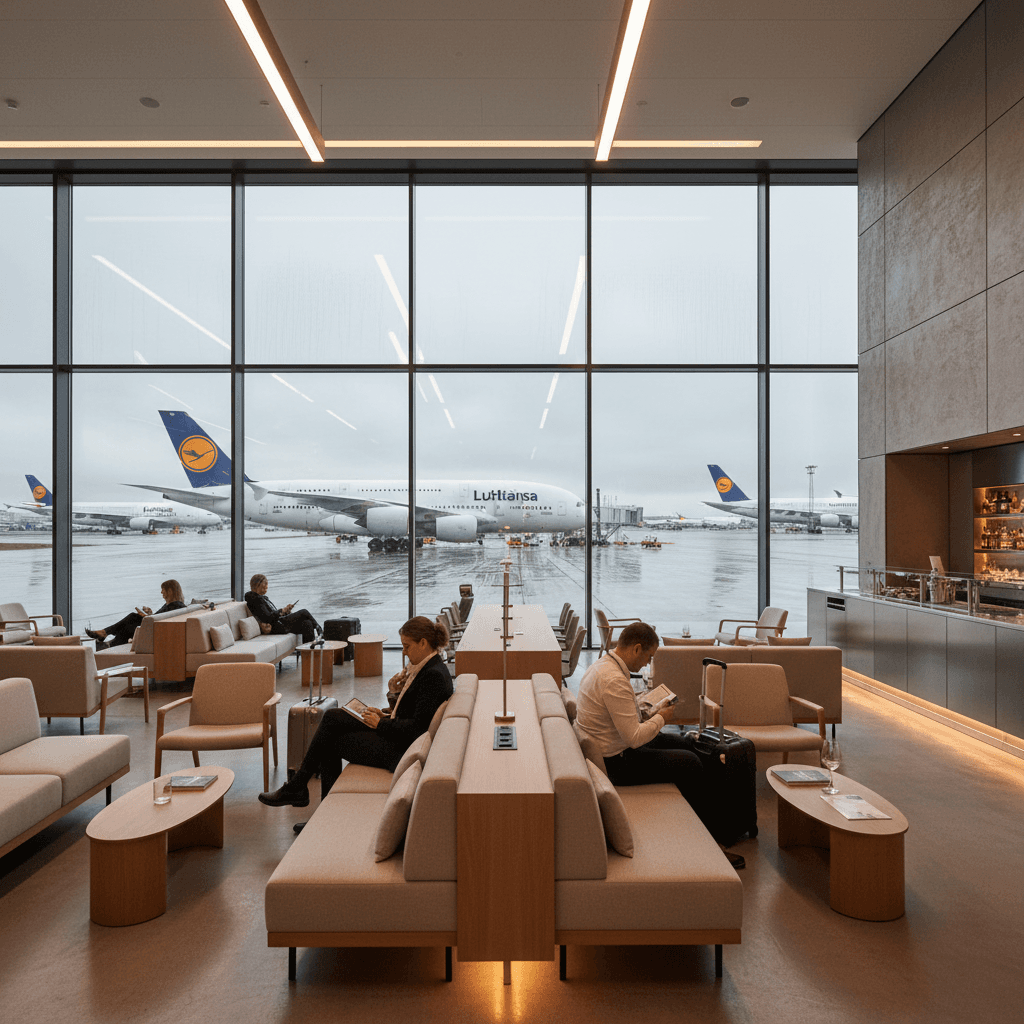
In this article
- Frankfurt (FRA): The Most Options, the Biggest Differences
- Munich (MUC): Limited but Serviceable
- Berlin (BER): The Newest Airport, Not the Best Lounge Selection
- Dusseldorf (DUS): A Pleasant Surprise
- Hamburg (HAM): Solid, No Surprises
- Other Airports
- The Uncomfortable Truth About Priority Pass Lounges
- Centurion Lounges: A Different World
- Guest Policy: How It Works in Practice
- When You Should Skip the Priority Pass Lounge
- My Overall Verdict
Priority Pass access is one of the most frequently cited benefits of the Amex Platinum. Over 1,400 lounges worldwide, with a good two dozen in Germany. What sounds like unlimited comfort in theory looks more mixed in practice.
I have been using Priority Pass for years, alongside the Amex Centurion Lounges and airline-specific lounges. That gives me a solid frame of reference. In this article, I walk through the most important German airports and honestly share what you can expect.
Frankfurt (FRA): The Most Options, the Biggest Differences
Frankfurt is Germany's largest airport and accordingly has the most Priority Pass options. That sounds good, but the quality differences here are the most pronounced.
Terminal 1:
Update October 2026: Priority Pass now lists only the LuxxLounge in Terminal 1 (before security) and three lounges in Terminal 3 in Frankfurt. The Primeclass Lounge no longer appears.
The lounges in Terminal 1 are mostly solid but rarely outstanding. The Primeclass Lounge in Area B is one of the better options. Hot food, a decent drink selection including spirits, enough seating, and an acceptable atmosphere. It is not luxurious, but it serves its purpose: a quiet spot with decent food, away from the gate area.
The Luxxlounge in Terminal 1 is also accessible via Priority Pass and offers a similar standard. Both are significantly better than the lounges you will find at some other secondary European airports.
The problem in Frankfurt Terminal 1 is less about quality and more about capacity. Friday afternoons between 3 and 6 PM are brutal. The lounges are packed, seats are scarce, and the buffet gets cleared faster than it gets restocked. If you are flying out of Frankfurt on a Friday afternoon, either plan plenty of extra time or skip the lounge entirely.
Terminal 2:
Terminal 2 is thinner on options. The Priority Pass offerings here tend to be smaller and less well-equipped. If you are departing from Terminal 2 (typically with SkyTeam alliance airlines or some point-to-point carriers), you have fewer choices.
My tip for Frankfurt: If you have enough time, it can be worth walking from Terminal 2 to Terminal 1 (or taking the SkyLine) to use the better lounge there, and then heading back. That costs 15 to 20 minutes each way and requires you to go through security again. Not always practical, but an option during long waits.
When to skip the Priority Pass lounge in Frankfurt: If you have access to the Lufthansa Business or Senator Lounge (through status or ticket class), those are significantly better. The food is higher quality, the atmosphere quieter, the showers cleaner. Priority Pass is a good fallback in Frankfurt, but not the first choice.

Munich (MUC): Limited but Serviceable
Munich has fewer Priority Pass options than Frankfurt, which is somewhat disappointing given the airport's size.
Update October 2026: there is no longer a Priority Pass lounge in Terminal 2; the remaining ones are in Terminal 1.
The Airport Lounge in Terminal 2, Area H (non-Schengen) is accessible via Priority Pass and is one of the better options. Decent buffet, quiet atmosphere, good view of the apron. A solid choice for long-haul flights from Munich.
In the Schengen departure area, the situation is trickier. The available Priority Pass lounges here are smaller and often overcrowded. Munich is a Lufthansa hub, and many business travelers have some form of lounge access. The competition for seats is correspondingly high.
What makes Munich special: Terminal 2 is generally one of the most pleasant in Germany. Clean, well-organized, with decent dining options even outside the lounges. On some days, the Airbrau in the terminal area is honestly a more pleasant experience than a packed Priority Pass lounge. Fresh beer, Bavarian food, open atmosphere. Not what you picture when you think of "lounge access," but sometimes the better choice.
Terminal 1 in Munich also has Priority Pass options that are relevant for passengers not flying with Lufthansa or Star Alliance. The quality is solid without being exciting.
Berlin (BER): The Newest Airport, Not the Best Lounge Selection
After its delayed opening, BER now has several Priority Pass lounges in the program. Expectations for a new airport are high; the reality falls slightly short.
The lounges at BER are architecturally modern, which you would expect from a new build. The food and drink selection sits in the middle of the pack. There are hot dishes, and the quality is okay but not outstanding. Seating is adequate, except during peak hours in the early morning and late afternoon.
What bothers me about BER: the distances. The airport is sprawling, and depending on your gate, the walk to the lounge and back can take 20 to 25 minutes. For a short layover, it is not worth it.
For travelers who regularly fly out of Berlin, the Priority Pass lounges are a nice extra, but not a reason to get a Platinum card.
Dusseldorf (DUS): A Pleasant Surprise
Dusseldorf is an airport that is often underestimated when it comes to lounges. The Priority Pass lounges here surprised me in a good way.
The Hugo Junkers Lounge is one of the better Priority Pass lounges in Germany. Spacious, well-stocked, with a drink selection that goes beyond the usual "coffee and orange juice." The food is fresh and regularly replenished. The atmosphere is calm, even during busier times.
For an airport of this size, the offering is remarkable. If I had to rank lounges across all of Germany, Dusseldorf would be in the top 3 for Priority Pass.
Hamburg (HAM): Solid, No Surprises
Hamburg offers Priority Pass access to several lounges, all at a similar level: decent, clean, with a basic selection of food and drinks. Nothing more, nothing less.
The lounges in Hamburg are typical examples of what I call "functional lounges." They provide a quiet retreat, Wi-Fi, coffee, a few snacks and drinks. They are not the reason you show up two hours early at the airport. But if you are waiting anyway, a significantly more pleasant spot than the gate area.
Other Airports
Stuttgart (STR), Cologne/Bonn (CGN), Hanover (HAJ), and other smaller German airports have occasional Priority Pass options. Expectations should be moderate here. Small lounges, limited selection, sometimes more of a separate waiting room than a real lounge. Functional, but uninspiring.
The Uncomfortable Truth About Priority Pass Lounges
I say this without malice but with honesty: some Priority Pass lounges are glorified waiting rooms. A room with chairs, a coffee machine, a few cookies, and a TV showing the news. No hot food, no showers, no peace and quiet. Especially at smaller airports or in side buildings of major airports, the disappointment can be real when you stand in front of a room with your Priority Pass in hand and it looks more like a dentist's waiting room.
Priority Pass is not a gateway to luxury. It is a gateway to a network with enormous quality differences. The best lounges in the network, particularly in Asia or the Middle East, are excellent. The worst are barely better than the gate area.
In Germany, the standard falls somewhere in the middle. Rarely outstanding, rarely bad. Usually functional.
Centurion Lounges: A Different World
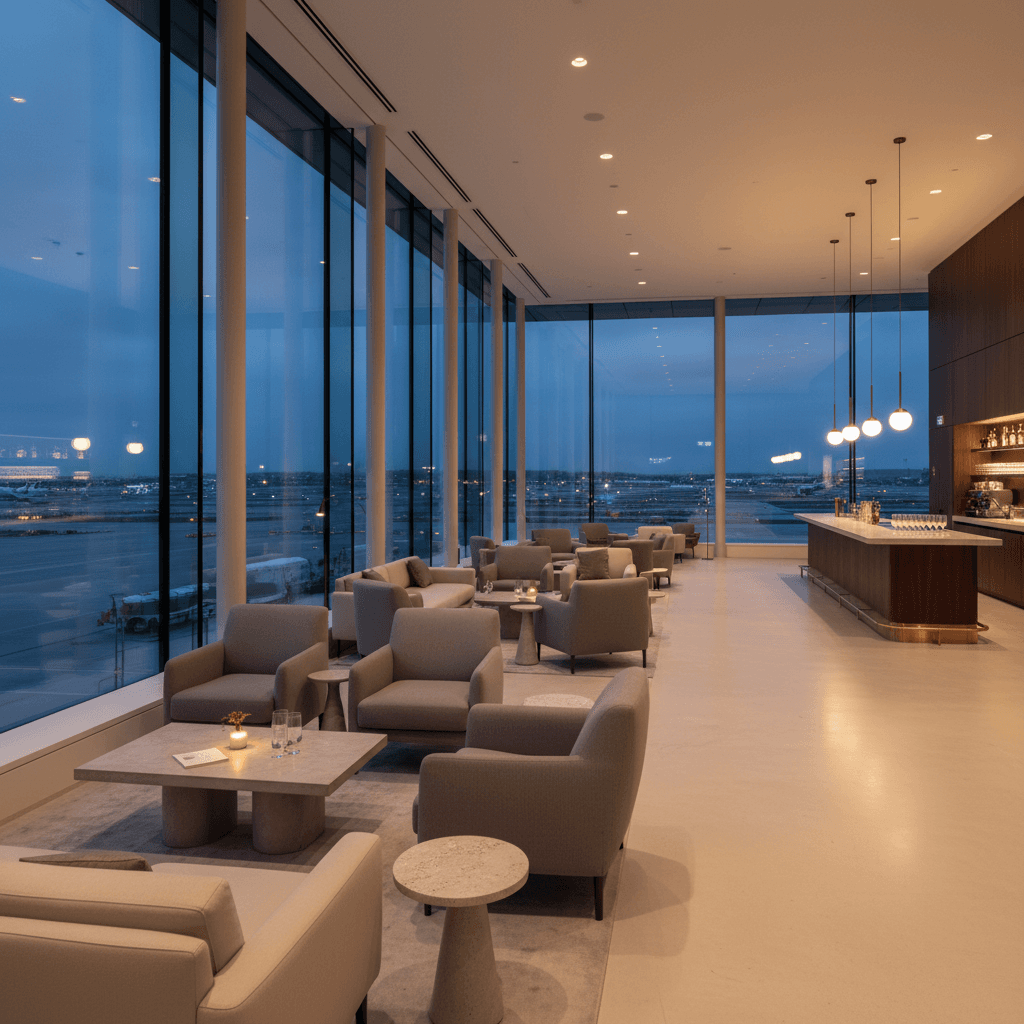
I mention this only for completeness: the Centurion Lounges that American Express operates are in an entirely different category. High-quality food, often curated by well-known chefs. Cocktail bars with real bartenders. Quiet work areas, showers, thoughtful design.
The problem: they exist almost exclusively in the US. Dallas, New York JFK, Miami, San Francisco, Los Angeles, and several other American airports. In Europe, there are none so far. For German travelers, they are only relevant if you fly regularly to or within the US.
If you do, the Centurion Lounges alone are an argument for the card. If not, they remain a nice feature for occasional US trips.
Guest Policy: How It Works in Practice
With the Amex Platinum, you can bring one guest into any Priority Pass lounge for free. Each additional guest costs a fee, typically around 35 euros.
In practice, this works smoothly. You show your Priority Pass card (or the digital version in the app), the staff member at reception scans it, you say you have a guest, and that is it. No discussions, no problems.
What you should know: some lounges have capacity limits. When the lounge is full, access is temporarily blocked, even for Priority Pass holders. This happens regularly on Friday afternoons in Frankfurt and at other airports during peak times. In those cases, even the card will not help. You have to wait until seats free up.
The Priority Pass app shows you which lounges are nearby, their opening hours, and whether there are known capacity issues. I recommend using the app and checking the lounge situation before your flight, especially at major airports.
When You Should Skip the Priority Pass Lounge
Yes, I am actually saying this. Sometimes the Priority Pass lounge is not the best option.
If you have airline status. Lufthansa Business or Senator Lounge, Emirates Business Lounge, most airline-operated lounges are better than the typical Priority Pass lounge. If you have access to both, choose the airline lounge.
If you have less than an hour. Walking to the lounge, checking in, sitting down, eating, walking back to the gate. It all takes time. For short stays at the airport, the detour is often not worth it. Stay at the gate and buy yourself a coffee.
If the lounge is overcrowded. A full lounge is no pleasure. If the app shows "high occupancy" or you see a line at the entrance, consider whether you would rather sit in a quiet cafe at the airport.
If there are better alternatives. Some airports have excellent restaurants or bars in the secure area. In Munich, there is the Airbrau; at some international airports, food courts that are better than any lounge. Lounge access is not an end in itself.
My Overall Verdict
Priority Pass in Germany is a solid benefit, not an outstanding one. The lounges are mostly functional, sometimes good, rarely exciting. At the major airports (Frankfurt, Munich, Dusseldorf) you will find serviceable options; at smaller airports, the offering is thin.
For frequent travelers who often connect or depart at German airports, Priority Pass saves money and provides comfort. For occasional travelers who fly twice a year from a small regional airport, it is barely relevant.
The real value of Priority Pass shows itself internationally anyway. The lounges in Bangkok, Hong Kong, Istanbul, or Dubai operate on a different level than their German counterparts. If you travel internationally often, the pass is significantly more valuable than a purely German perspective would suggest.
But this article was about Germany. And here is the honest summary: useful, not mind-blowing. A pleasant extra, not a selling point.