Centurion Card Cost 2026: Is the Black Card Worth It?
 Christian··5 min read
There is a lot of speculation about the cost of the Centurion Card. Forum posts regularly cite wrong numbers, some too high, some too low. Here I will lay out what the card actually costs, what you get for it, and whether the math works out. No rumors. Real numbers from a real cardholder.
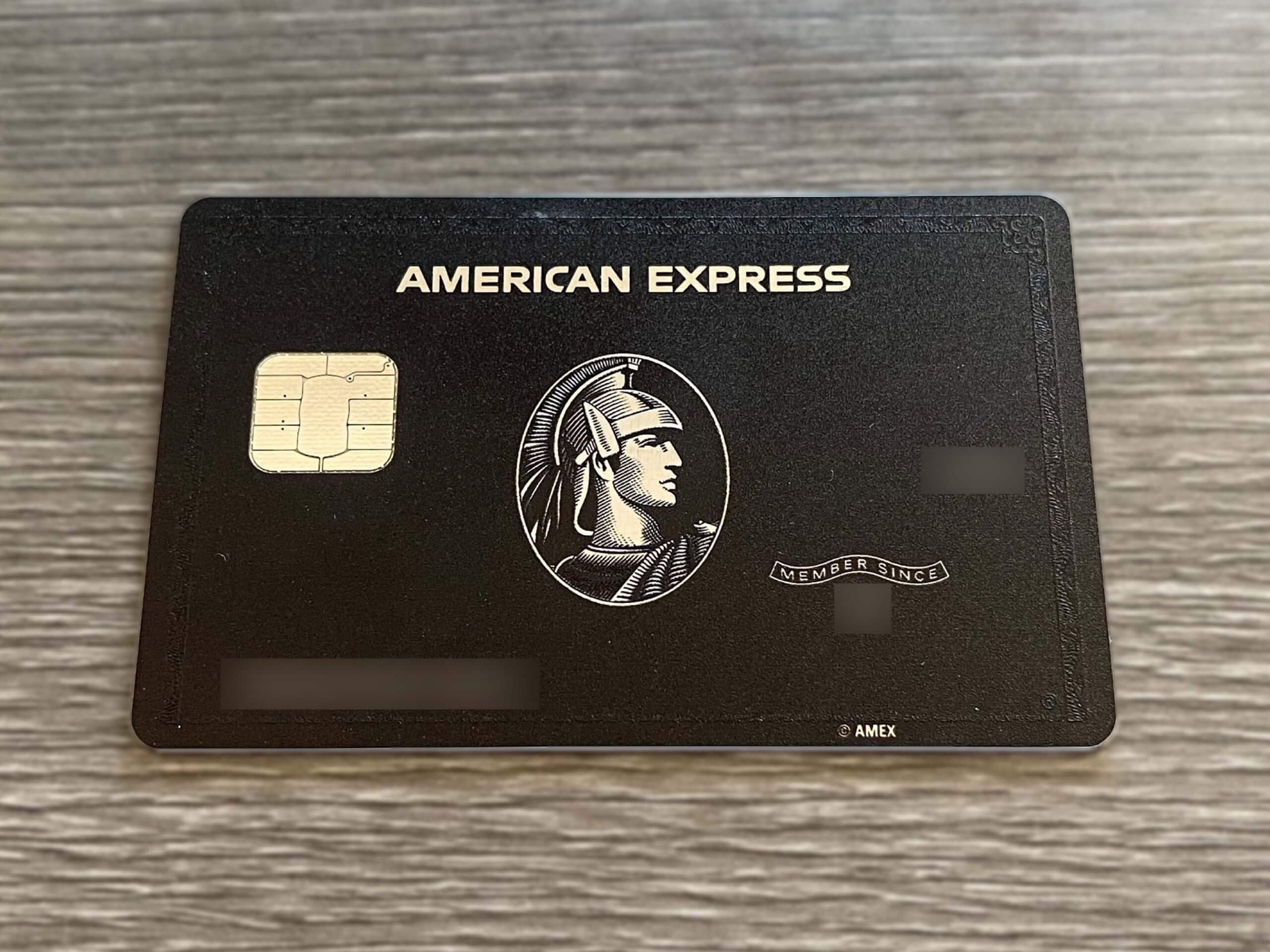
The Hard Numbers
Annual fee: 5,000 euros. That is the amount due every year. No discounts, no negotiation. 5,000 euros, whether you use the card daily or leave it sitting in a safe.
One-time initiation fee: 5,000 euros. Only charged once, when you receive the card. So in your first year, you pay 10,000 euros. From year two onward, it is 5,000 euros.
Annual fee payable with points: The annual fee can be paid with 500,000 Membership Rewards points. The initiation fee, however, can only be paid in euros.
Partner card: one included. The first additional card is included in the price. Each further card costs 5,000 euros per year. The partner card comes with its own lounge access and concierge privileges.
In total: 10,000 euros in the first year, then 5,000 euros (or 500,000 MR points). The partner card is included. That is a lot of money. The question is whether the value is there.
What You Get for It
Let's start with the benefits that can be directly quantified.
Concierge Service
The Centurion Concierge is available around the clock, fast, and excellent in its core areas: restaurants, hotels, travel. I have written about it in detail. The monetary value is hard to pin down. If you use the service regularly, you save time. And time has a value that varies greatly from person to person.
Fine Hotels & Resorts
With FHR bookings, you get breakfast for two, a hotel credit of typically 100 US dollars, late checkout until 4 PM, and an upgrade when available. Per stay, that amounts to 150 to 350 euros in added value, depending on the hotel. With four FHR bookings per year, you are looking at 600 to 1,400 euros.
This is real. The room rates through FHR match the best flexible rates. You pay the same price and get the extras on top.
Lounge Access
The Centurion Card comes with Priority Pass. But the real lounge benefit is the Centurion Lounges, operated by American Express itself. There are over 20 locations in the US, and they are significantly better than most Priority Pass lounges. On top of that, there are various partner lounges worldwide.
Each lounge visit saves you 30 to 60 euros in entry fees. At ten lounge visits per year, that is 300 to 600 euros. If you use the US lounges, the value is higher because the quality far exceeds what single-entry access would suggest.
One perk that often gets overlooked: with the Centurion Card and a ticket on a Lufthansa-operated flight, you get access to the Lufthansa First Class Lounge, even when flying Economy. This only works on flights with an LH flight number, not Swiss or Austrian. In Frankfurt and Munich, the First Class Lounge ranks among the best airline lounges in the world and is, for many Centurion cardholders in Germany, the single most valuable perk the card offers.
Hotel Status
The Centurion comes with Hilton Honors Diamond and Marriott Bonvoy Gold. Hilton Diamond is the more valuable of the two. You get breakfast, upgrades (often to suites), Executive Lounge access, and 100% bonus points. If you regularly stay at Hilton properties, the value here is substantial. A suite upgrade plus breakfast can be worth 200 to 500 euros per stay.
Marriott Gold is solid but not a selling point. No automatic breakfast, limited upgrades.
Insurance Package
The Centurion comes with comprehensive insurance: international travel health insurance, trip cancellation insurance, luggage insurance, rental car insurance, purchase protection. The terms are good to very good. If you previously had separate travel insurance policies, you can save 100 to 300 euros per year.
Membership Rewards
For every euro spent, you earn 1 Membership Rewards point. If you activate the Points Turbo (15 euros per year), you get 50 percent more on the first 40,000 euros of annual spending, meaning 1.5 points per euro. At 100,000 euros in annual spending, that gives you around 130,000 points (60,000 from the first 40,000 euros with Turbo, plus 60,000 from the rest). Transferred to airline partners, the value sits at 0.8 to 2.0 cents per point, depending on how strategically you transfer.
This is real value, but only if you use the points wisely. Anyone who lets them expire or redeems them for gift cards is throwing away most of the value.
What Has Been Cut in Recent Years
This is where it gets uncomfortable. Over the past two years, the Centurion Card has lost several benefits that were core to the offering.
Emirates Skywards Gold Status. Cut since July 2024. The automatic Gold status with Emirates was one of the most valuable airline perks of the card. Lounge access, priority boarding, bonus miles. Gone.
Net-a-Porter and Mr Porter credit. Cut at the turn of 2025/26 and replaced with a Lodenfrey credit. An international shopping platform with 800 designers swapped for a single Munich fashion house. The amount is nominally even higher, but the quality of the benefit has clearly declined.
Valet parking service at the airport. Cut. Drop off your car at the terminal, pick it up after your trip. It used to be part of a seamless airport experience alongside the VIP service. Now that chain is broken.
Each of these losses on its own is manageable. Taken together, it is a pattern that raises questions. The major benefits are still standing, but the mid-tier and smaller perks that made the card tangible in everyday life are disappearing. And the annual fee stays the same.
The Honest Math
Now let's get specific. I am calculating with my actual usage numbers.
The most important point first: the 5,000 euro annual fee can be paid with 500,000 Membership Rewards points. With my annual card spending of roughly 500,000 euros, I earn enough points to cover the fee entirely. The 5,000 euro initiation fee is only payable in cash, but that is a one-time charge.
Effectively, the card costs me nothing in ongoing fees. The benefits are free on top.
Fine Hotels & Resorts: 4 bookings per year, averaging 250 euros in added value per booking. Total: 1,000 euros.
Hilton Diamond: 6 nights per year at Hilton properties. Breakfast plus occasional suite upgrade, averaging 180 euros in added value per stay. Total: 1,080 euros.
Lounge access: 12 visits per year, 4 of them at Centurion Lounges, plus regular access to the Lufthansa First Class Lounge. Averaging 45 euros per visit. Total: 540 euros.
Insurance: Savings compared to separate policies: roughly 200 euros.
Concierge: Hard to quantify. I conservatively estimate 300 euros for time saved and better results on bookings.
Lodenfrey credit: 100 euros — but from 1 October 2026 only against a 200-euro minimum spend per 50-euro voucher, so 400 euros of your own spend for the full 100. If you would not shop at Lodenfrey anyway, set this line to zero.
Total quantifiable benefits: roughly 3,220 euros, and the annual fee is covered by points.
The math works if you put enough spend on the card to pay the fee with points. At 500,000 euros in annual spending, that is the case. If you spend significantly less, you have to pay the 5,000 euros in cash, and the calculation looks very different.
The Math That Does Not Show Up on Paper
The pure numbers do not tell the whole story. There are aspects that cannot be quantified in euros but are nonetheless real.
Access. The Centurion Card opens doors. Not metaphorically, but literally. Hotels treat you differently. Restaurants accept your reservation even when they are full. Airlines escalate faster when something goes wrong. This is not a myth. I have experienced it hundreds of times. Whether that is worth 5,000 euros per year is something everyone has to decide for themselves.
Events. The Centurion Living Events, provided they retain their original character and have not devolved into sales pitches, offer access to experiences you cannot book. A private dinner, an exclusive screening, backstage access. In good years, there were three or four such evenings, each worth several hundred euros on its own. In recent years, the quality has been inconsistent.
The VIP airport service. At airports like Frankfurt and Munich, Centurion cardholders can use a VIP terminal service. Private check-in, escorted security, sometimes even a car to the aircraft. This is not included in the card fee and costs extra. But the access comes through the card. And once you have used it, you will not want to go without.
Peace of mind. This sounds abstract, but it may be the most honest reason I keep the card. When something goes wrong while traveling, when a flight is canceled, a hotel is overbooked, a rental car is not there, I call one number and someone takes care of it. Quickly, competently, without argument. That safety net has a value that cannot be quantified, but it travels with me on every trip.
Who the Card Is Worth It For
You travel a lot. At least ten to fifteen times a year, some of it internationally. You regularly stay in hotels, ideally properties that participate in the FHR or Hilton programs. You use the concierge, you use lounges, you use the points wisely.
You entertain for business. Booking restaurants, hosting clients, finding special venues. The concierge saves you not just time here, but often delivers better results than your own research.
You value the service aspect. You want someone who takes care of things when something goes wrong. Not a hotline with a twenty-minute hold time, but a direct line to someone who can make decisions.
If two of these three apply to you, the Centurion Card can pay off. But "can" is the operative word. You have to actively use the benefits. The card delivers nothing on its own.
Who It Is Not Worth It For
You think the card is a status symbol. It is not. Or more precisely: it is, but that alone is not worth 5,000 euros per year. In daily life, the Centurion Card is a piece of titanium that works just like any other credit card. At the supermarket checkout, nobody cares about your card. At a restaurant, same thing.
You rarely travel. If you fly three times a year and stay in a hotel twice, you will never come close to using the benefits. The Platinum at 720 euros offers most of the travel perks.
You do not want to engage with the system. The Centurion brings benefits that must be actively used. FHR needs to be booked, the concierge needs to be called, the points need to be transferred. Anyone who simply uses the card as a payment method is burning money.
The Invitation Process
One thing is rarely discussed openly: How do you even get the card? You cannot apply for the Centurion Card. You are invited. Or more precisely: American Express identifies you as a potential candidate and extends an invitation.
The exact criteria are not public, but based on my own experience and conversations with other cardholders, the following factors play a role: high annual spending on existing Amex cards (the commonly cited threshold is 250,000 to 400,000 euros, but it is not a hard line), a long-standing customer relationship, and a specific spending profile. Those who spend heavily on travel, hotels, and restaurants are more likely to be invited than someone who runs the same amount through Amazon.
There are reports that you can actively pursue an invitation, for instance through a conversation with your Relationship Manager or by deliberately increasing Amex spending. Whether that works, I cannot confirm. My invitation came without me ever asking for it.
The process itself was straightforward: invitation letter, brief review, confirmation, card arrived within two weeks. The initiation fee and the first annual fee were due with the first statement.
Platinum vs. Centurion: The Real Question
The Platinum costs 720 euros. The Centurion costs 5,000 euros. The premium is 4,280 euros per year.
What do you get for that premium? A better concierge with shorter wait times and more experienced agents. Hilton Diamond instead of Gold, which in practice means the difference between "nice upgrade" and "suite upgrade with Executive Lounge." Centurion events, provided they still have their original character. VIP airport service access. And the vague but real feeling that the card opens doors the Platinum does not.
Does that justify 3,280 euros? In most cases, no. The Platinum covers 80 percent of the value at a fifth of the price. The Centurion is for the remaining 20 percent, relevant only for people who travel extensively, spend heavily, and use the service intensively.
My Personal Conclusion
I have been using the Centurion Card for several years. In some years, it has paid for itself many times over. Years with lots of travel, lots of FHR bookings, lots of concierge requests. The value clearly exceeded the 5,000 euros.
In quieter years, fewer trips, fewer events, the eliminated benefits, I do wonder whether the Platinum would have been enough. The honest answer: probably yes.
Why do I keep the card anyway? Partly out of habit, I will admit that. Partly because the concierge and the lounge access make a real difference in the moments that count. And partly because the card helps in situations you cannot plan for. The flight that gets canceled. The hotel that is overbooked. The last-minute change that needs to be resolved immediately.
The Centurion Card is not a good deal in the traditional sense. You pay more than you get back on paper, unless you optimize actively. It is a service product. You pay for someone who takes care of things, for access you would not otherwise have, and for the certainty that in a pinch, someone is working on your behalf.
Whether that is worth 5,000 euros per year to you, I cannot say. It is to me. Most years. And in the years when I have doubts, one well-resolved situation reminds me why the card is in my wallet.
For anyone considering the card: do the math honestly. Not with maximum values. Not with what you could use. But with what you will actually use. If the numbers add up, the Centurion is a remarkable card. If they do not, the Platinum is the smarter choice.